Showing posts with label cooking. Show all posts

Tuesday, May 7, 2013

Worms, screen-free week, gardens, and more friends!


This blog covers a longer period than most, partly because we recently had a screen-free week. The kids were into the idea, and I joined them, though I did use email and recipe lookup sites. But not this one. :)  So here's a sampling of what we've been up to:

Reading
  • One day, T realized that he could touch my phone screen in such a way as to highlight words on a web page. He loved highlighting different words and portions of words and having me read them. He did it over and over, breaking down different words, phrases, and parts of words, and he noticed with interest that when he highlighted the "hum" part of "human" I pronounced it differently than I did when the whole word was highlighted. He also liked highlighting spaces between words and asking me which words he'd just separated.
  • P has been reading a novel called The Merlin Effect from the library, and other books from time to time. She's also been devouring comic-strip treasuries, including The Far Side and Calvin and Hobbes. The Far Side books have been fun for exploring some of the cultural references the jokes rely on. 
  • My sister sent several picture books for the kids' birthdays, about the civil rights struggle of the 1950s-1960s in the United States, and we've read those together and talked a little about what was going on then and how things are different now, though racism still happens in some ways. Before I even got to the books, P had read all but one.
  • We did a lot of reading aloud during screen-free week, even more than at other times. Some reading was by candlelight. I liked turning off the lights in the evening and reading in the circle of candlelight with the kids. It's amazing how distractions recede when the circle of light in a room is small. We focused better on the story and each other, and had good conversations, at those times.
Doing
  • We took a trip on an airplane, the first T can remember. He loved watching the control surfaces on the wing do their things, always pointing out when he saw them change. We talked a little, when we were at full flaps for landing, about how that mimics birds who cup their wings forward when landing, to maintain lift while slowing forward motion. P was amazed at how slowly we seemed to be moving when we were up high. We played with different ways of clearing our ears on ascent and descent. We speculated about where the stuff in the airplane toilet goes on flushing. Here's a good answer.
  • We started an indoor worm bin, buying worms from a garden center. We put it together, and the kids like looking inside to see where the worms are, what they seem to like best to eat, and how the food scraps change over time.
  • The kids also enjoyed helping me assemble the outdoor compost bin, and playing inside it until we took it out and started loading it up. 
  • During screen-free week, we played a lot of cards. P learned to play Gin, Five Crowns, Spit, and War with me. War (the most boring card game ever?) was made more interesting by having T judge who won each comparison. He was quite accurate in his decisions, and seemed to enjoy the practice. I asked if he'd give us a dramatic decision ("Queen beats three!"), and found that he didn't know all the number names; but he was game, so he got some practice with them.
  • While T was having his gymnastics class one day, P and I sat in the bleachers. There was pop music playing, and I heard P starting to hum in harmony with the music. I started tapping some body percussion and then humming another harmony along with her. It kept changing over a few songs, and it was a wonderful series of wordlessly collaborative improvisational moments.
A great hand-me-down gift from a neighbor a few years ago comes into its own.
  • Both kids have played a lot recently with a color-sorting toy that uses binary ideas. T traces routes physically, adjusting the controls on the left to let a ball go where it belongs. P was doing the same. Then I asked them if they'd figured out the number part -- that if you make the numbers with "1" next to them on the left add up to the number under the slot you're aiming for, the ball will go there. Both of them started paying more attention to that and practicing some addition as a result. I gave P an introduction to writing numbers in binary format, but I'm not sure it stuck.
Making
  • T's birthday happened recently, and P made her presents for him. He's always wanting to take over the couch or a long table as a runway for his toy planes, so P made him a cardboard runway, complete with a slight upward slope, drawn-on lights, and directional arrows. She also made a sort of airport terminal with waiting area, complete with tiny scrolls for the people to read while they waited.
  • One day while I was digging the garden, T and P worked together inside to build a zipline the right size for Polly Pocket dolls to use, plus hooks and harnesses they could ride in.
Writing
  • P told me one morning recently, when everyone else got up rather late, that she'd been in her room since early, drawing and writing. She hasn't yet showed me what she did.
  • One morning, I found T had arisen before me and was diligently writing letters in a book for that purpose. P told me he'd found the book the night before. T used it all day, asking for different kinds of help (more details early on, then less as he got the hang of it), and going through all the letters. The next week or two, he used a magnetic drawing tablet a lot to write different things. One morning he asked me to show him how to write his name, so I wrote an example for him on a nearby dry-erase board. He wrote it beautifully, then erased both versions and kept writing his name through the day. He's written his name before, but this was the first time he did it without a model right in front of him. He's not reading very much yet, though he is recognizing some words in context by their first letters. It seems he may be learning to write first. :)
  • T and I worked together to compose a thank-you note for a birthday gift. He didn't know what to say (it's a new skill for him), so I talked about the sorts of things people often say, asked him what he liked about the gift, and made suggestions about what to write, writing down the ones he approved of.
Watching
  • I read in a favorite mom's blog about her kids, who enjoy cooking, doing "Iron Chef Lunch" some weekends when she is fresh out of energy and lunch ideas. I thought that could be fun if we built up the right skills and knowledge, so we watched a couple of episodes of Iron Chef America. The kids didn't like it as much as I did, but they got the concept, and it was interesting, if a little creepy, watching the crayfish episode (all recipes starting with live crayfish). We talked about crayfish basically being big water-dwelling bugs, and about other instances of human eating bugs on purpose.
Listening
  • We had the radio on more than usual during our screen-free week, usually to the public-radio talk station. We didn't talk a whole lot about what we heard, but I could tell that at times the kids were listening. Sometimes if I went to turn the radio off, P told me she was listening and wanted to finish the story.
Talking
  • P and T invented and initiated their own game, in T which gives P a series of numbers, and she adds them one by one for a cumulative total. I just listened to her get to 47 without making a mistake, even when she was mentally adding two 2-digit numbers (16 and 21). They've been doing this when I wasn't listening, they say. It tickles me to listen to P improving her mental arithmetic while T improves his sense of numbers and how quickly or slowly they add up.
Visiting
  • We went to the county recycling center to buy a good compost bin at a good price. They had a self-guided tour area from which we could see the sorting machines, the railroad spur that took the recyclables away, the wetlands that were helping with water purification, and lots of useful signs explaining the process of separating recyclables from each other and from contaminants. There was also a display that did a much better job than the pamphlets we get in the mail of explaining what can go in the curbside pickup, what can't, and why. Seeing how the machines worked made these rules make much more sense, too.
  • I've been digging up a garden plot in the front yard, and that has helped with meeting neighbors. Recently a dad and two kids were ambling by, and I called T out to play (P was away at a musical with UnschoolerDad). We found out where they lived and visited them shortly afterward, seeing their garden and backyard and meeting their backyard chickens.
  • I saw the next-door neighbor's child, a little older than mine, playing in the snow one day by herself. I asked if she'd like to play with my kids if they came out, and she said yes, so P and T dressed in a hurry and spent the rest of the afternoon playing outside with her. That was the start of a beautiful relationship -- she comes over often to play, and we are in good communication with her parents. This is the first time we've had a friend close enough for truly spontaneous visits and play, and we're loving it. P went to her house one day and played with her six pet rats.
  • P went to an evening campfire at church with me. After we'd toasted our fill of marshmallows, I fell in with the music makers, and she played with several kids around the big yard. She told me afterward that she needed to come to the late service the next day, since she'd agreed with another kid to meet and check on the rabbits they'd found. Usually P and T don't come with me to church; I go to the early service and come back quickly so UD can do his own Sunday activity, and the kids prefer to stay home. That Sunday, though, they both went to church, and they both enjoyed it. I hope we're opening the way for them to enjoy church with me. They are both registered for a week-long day camp at church this summer, and with luck, they will build some friendships there that will make church even more fun for them.
  • On our trip by plane, we visited friends, family, the beach in Alameda, and Chinatown in Oakland. On the beach we looked at birds, shells, erosion patterns, and how the tides went in and out. The kids built sandcastles. In Chinatown we tried new foods from a dim sum takeout stand, looked at traditional and American-influenced children's clothing for sale, looked at and bought a few beautiful things made of fabric and semi-precious stones. We also noticed how many more people were hanging around outdoors, without or without their families, and talked a little about the history of Chinese immigrants in the American West and how and why Chinatowns would have formed and persisted.
Thinking, Asking Questions, Planning...
  • In the car one day, we were listening to a story on NPR about the foster care system. The interviewer mentioned that the guest had been a foster mom for more than a quarter century. I kept listening for a couple of minutes, and then P said this: "A quarter century would be 25 years. Because I know half of 100 is 50. And the sound on my computer goes up to 50, and when it's exactly halfway up it's on 25. [She told me later she knew it was exactly halfway because she could see it on two different scales, one showing 50 out of 100 and one showing 25 out of 50.] And half of 5 is two and a half, and if you imagine each of those ones is a ten, then the half is five, and that makes 25." I was tickled to hear all this -- it's not how I would have taught it (except maybe the last part), and she connected it all together on her own. I asked her later how she knew half of five was two and a half. Her answer: "Well, it wouldn't be fair if one person got three and the other got two, so each should get two and a half." Spoken like a big sister who needs to know these things!
  • Again in the car, P asked about the GPS display (miles to next turn):
    - That three point four there, how do you say that?
    - I'm not sure what you mean. I'd say three point four.
    - Yes, but what does it mean?
    - Oh, it means 3 and four tenths. If there were another number, like three point four five, that would be hundredths: three and 45 hundredths.
    I say a little about how UnschoolerDad and I sometimes talk about short times in milliseconds, which are like three decimal places. 100 milliseconds is one tenth of a second.
    P is quiet a moment, then says:
    - I just realized something. One in ten is the same as ten in a hundred is the same as a hundred in a thousand.
    - Yep, that's right. (I went on a bit more about equivalent fractions, but she had moved on, so I let it go.)


Saturday, June 16, 2012

Through the (Now Much Longer) Long Gap: Part II

It's been a very long time since I wrote. This blog might be getting less frequent in general. I'm finding that, as I really pay attention to what the kids are doing and learning, and as I do more with them, things flow in a way that's harder to write about because we go SO many places in such a short time sometimes. For my next blog entry I'll try a different format for a change. But here's the entry that would have come in late April, based on the notes I made then -- words like "today" and "yesterday," of course, have a very different meaning now!

There's been some developing body awareness: the kids' awareness of their own needs, and my awareness of  how to support them in meeting the needs. T has been moving toward giving up his naps, so early in these last few weeks I stopped trying to help him get down for them, except when he's really dead on his feet. A few times in that first week, he went to bed and took a nap on his own initiative, asking us to close his curtains so his room could be dark. After the first week, he napped less, but sometimes fell asleep on the couch just before or after dinner after a big day. UnschoolerDad and I still need a somewhat regular sleep schedule to keep up with work and the kids, so we still encourage a bedtime, trying to keep it pleasant and loving. Sometimes T really doesn't want to go to bed, and other times he goes down easily. P usually goes to bed without much protest, but I'm sure it helps that she can read in bed if she wants.

A recent outing to a Russian festival on the nearby college campus brought unexpected learning opportunities, in addition to the chance to hear Balkan music and try some Russian cookies. We rode the bus to the festival to avoid parking difficulties near campus, and P spent a long time reading the route map and learning how to use it. (P and T have also been playing a lot lately with a United States map that goes with their Tag reader, getting more familiar with where things are in our home country.) When the festival didn't hold the kids' attention (it wasn't geared as much to young people as we thought it might be), we wandered down to a nearby pond, where P noticed the way the pond drain was built and we talked about how that would keep the pond at a constant water level. We checked out the turtles resting on a log in the pond and thought about why they would choose that spot for warming sun, available moisture, and sufficient distance from likely predators. Someone was trying out his thrift-store radio-controlled boat on the pond, and he let each of the kids steer it for a little while, which they loved. We met a few other homeschoolers, broadening our local network a bit.

In the food department, T has a typically narrow diet for a four-year-old, but not too much so (lots of bread, tortillas, cheese, and peanut butter and jelly, with some fruits and vegetables and a few beans, other grains, etc.), though he's growing a bit more willing to taste new things; I hope our not forcing the issue will help him continue getting more adventurous and finding more things he enjoys. [Note from June: He has continued to be more willing to taste things.] P is enjoying more variety, sometimes choosing to make herself salads with custom ingredients (a favorite recipe follows) rather than eat the old lunch standbys. She's told me she wants to learn to prepare more of the foods she eats, and maybe go for a week making all her own food and some of T's. So far she's gone a day, but then wanted help, which is fine with me. She sometimes asks to help when I'm cooking, too.

     Rockin' Salad - P's invention
          1 apple, cut up in chunks
          1 green onion, chopped
          12 or so green olives
          1-2 ounces of cheese, preferably pepper jack, in chunks
          No dressing required. Side dish of sardines can be nice. 


P wrote the list of ingredients for her salad, and the beginning of a story she's writing and illustrating. I showed her how to use Word's spell checker when she's not sure how to spell something -- for every misspelled word we entered into it, she picked the correct alternative from the list of suggestions, so I think she's learning to identify correct spellings by sight for familiar words, even if she can't produce the correct spelling on the first try herself. I've heard that other unschoolers have learned to spell in a similar way. I'm trying to support P using the computer to find what she wants (log in to a game, or Netflix, or look up something on the internet if she's willing), so keyboarding is becoming motivated for her. I still do stuff for her if she asks me, but she's more and more willing to do it herself. I need to think about which of my online passwords I'm willing for her to have! Fortunately they're all different, so we can pick and choose. She's starting to learn to navigate what actions might cause problems (being charged money unintentionally, going to a web site that might put malware on our computer, etc.), but she still has a lot to learn. Mostly I stay close by when she's using the computer, so we can check out unfamiliar situations together. I'll have her read me dialog boxes rather than just looking and clicking through myself, so she learns what they say and how to respond, and when possible I try to explain why I choose the action I do.

In other writing fun, P used the phrase "big cat allergies" to mean severe allergies to cats. I giggled about the possible alternate meaning (allergies to lions, cheetahs, etc.), and she wanted to know what was funny, so I showed her how punctuation could make the difference between "big cat allergies" and "big-cat allergies."

P recently received a Lego Friends set, with hundreds of itty-bitty pieces to assemble into a cafe scene. She meticulously followed the instructions, which had no words but required close attention to detail over a long period, and successfully assembled the cafe. I was interested to see that she built a mirror image of what the instructions showed, so I asked her about it. She had noticed that several steps in, and thought hard about how to reverse each subsequent step.

One day P and I had a great conversation about economics. P started it by remarking that, since Luna bars seemed to be getting more popular, she thought their makers might raise the prices since the demand would be higher. (We had talked once before about low supply and high demand leading to higher prices.) I said they might do that, but because it would make some customers unhappy and prompt them to look for cheaper brands, perhaps they'd increase their profits in other ways, like running the machines that make the bars for extra shifts and hiring more workers. We talked and thought together about economies of scale -- even though the extra power and worker hours would cost more, Luna might not need more machines; or if they did, they might be able to fit them in existing factory space; and so on, allowing the product to get cheaper as production and sales increased. We also talked about how, if Luna needed to increase prices to cover their costs, they might bring out new flavors that would cost more, and later bring other prices up to match if the new flavors were popular enough; or possibly they'd make some product improvement they could tout on the packaging and increase the price at the same time. And we went backwards in time, thinking about how a person selling their first-ever snack bars, baked at home, at a farmer's market say, might have to charge a lot more per bar to start off (no wholesale deals on ingredients, no economies of scale in production)  -- but how some people might be willing to pay those prices for an interesting new product, or because they could meet the producer and find out a lot about the product. And then that person might ramp up production by leasing a commercial kitchen and hiring workers to help, if the demand was growing and a local store wanted to carry the bars. Some of these concepts have come up in other conversations since.

P thinks a lot about ways to make money. We watched a video together about Caine's Arcade -- it's really worth seeing and is linked below. P asked if I thought she could do something similar, and we talked about the advantages Caine had -- one of the biggest being the use of a storefront, since his dad's auto parts business had mostly gone online. (Of course Caine had only one customer until the flash mob -- we haven't gone there explicitly yet, but I think P understood.)


Not long after watching this, P built a supermarket for fairies out of paper and cardboard. It included shelves for the goods being sold, signs, and an elevator so the tiny fairies could get from one level to another.

P asks almost every day what something means -- something she's heard on the radio, or read in a story, or seen in a TV program. Today, as we ate dinner and she watched a baseball game being played silently on the TVs in the restaurant bar, she asked what the goal of a baseball game was. Yesterday she clarified the meanings of increase and decrease. Today we followed up with what "in decline" meant when said of a person or animal.

Both kids got cameras of their own this month, so UnschoolerDad and I can worry less about ours getting wet, dropped, lost, etc. The kids noticed odd blurs in some of their images and turned it into a ghost hunt! We also experimented with taking photos of moving objects, or scenes with large disparity in lighting, and trying to create some of those mysterious blurs in those ways.

A quick math/numbers roundup:

  • T made his first paper-model cell phone -- the kids play with these a lot, but in the past P has made them all. T wanted to write the numbers on his phone, and P helped by writing sample numbers he could copy.
  • P came and offered to show me how to divide a pizza into 3 equal parts, using a drawing. The pattern blocks were out, so I duplicated her picture using a yellow hexagon with 3 blue rhombuses arranged to cover it, so the same angles showed up in the middle. She watched, then said in an odd, sing-song way, "That's science." So I sang back, "Or math, or geometry, or life." She smiled.
  • P was setting up an easter-egg hunt for both kids. She had 16 eggs, and unasked, she worked out that they could find 8 eggs apiece. Thinking about it a bit, she then exclamed, "I did that right!" and explained her reasoning: half 10 (5) plus half 6 (3) is eight.


Friday, December 9, 2011

Cabin Fever and Its Fruits

Another week and though I'm improving slowly, I'm still sick. I guess I need more sleep. But unschooling carries on, albeit at a somewhat slower pace and with a measure of cabin fever.

In the world of ideas about school: Two different people pointed me to a Washington Post article about a school board member, a very successful businessman, who pledged to take the high-stakes tests students in his district were required to pass for graduation, and to publish his results. Of 60 math questions (to take just one section), he knew the answers to none but was able to guess correctly at 10. This experience raised huge questions for him about who writes these tests, who decides what should be on them, and how the results should be used -- he would have been required to take a remedial reading course based on his results. I recommend the article heartily.

Here's a simple, mama-needs-sleep-soon list of highlights for us this week:
  • We set up and decorated our large artificial Christmas tree. P is now strong and dexterous enough to get the branches into place on the trunk, and T can now read letters reliably, so my role has been reduced to fluffing up the branches, mediating minor squabbles, and doing things too high for either child to reach. It was a good exercise in cooperation among the three of us, and we did pretty well. Our biggest wrangle was over playing with ornaments (delicate) as if they were toys (stronger). After gluing several broken ornaments back together, I ended up hanging the precious things high and giving up on protecting things that weren't of great sentimental value to any of us. The subsequent decrease in interest in the ornaments has me wondering whether my reaction wasn't one of the fun parts of playing with them. In any case, one of the things I'm working on is decreasing my attachment to particular objects and ways of doing things, especially where that attachment conflicts with my kids' desires for learning and interesting experiences.
  • We rolled, cut, and baked dough ornaments. Decorating them is waiting on a trip to the craft store for acrylic paints. As we measured the flour for the dough, we found it infested with some kind of maggots. We looked them up and found they were probably Indian Meal Moths, common worldwide. We looked at photos of them, read a bit about their life cycle and methods for controlling them, and then proceeded to sift them out of the flour and make our ornaments. At least one was alive and wiggling. Having lived in Northern California, where similar (identical?) critters called orchard moths are everywhere, we already keep most of our vulnerable foodstuffs in airtight containers, but our crafts-only white flour was unprotected.
  • We roasted some chestnuts, after looking up different ways to cook them and settling on the method used by New York street vendors, which is to boil them until tender and then just toast them a bit for nice looks. Along the way we looked at photos of chestnut trees, chestnut lumber, and the furry green casings in which the nuts grow. We talked a bit about chestnut blight and how its has almost completely wiped out American chestnut trees, so we're eating chestnuts from Asian chestnut trees, which coevolved with the blight. After speculating a bit about the etymology of chestnut, we looked it up and found it has nothing to do with chests, but is most likely what some English speaker heard when someone said Castanea, the genus name and original name of the tree in many places, across language groups.
  • P got out an origami-per-day calendar I gave her a while back and wanted to learn to fold things from it. I'm helping her learn to read the instructions and diagrams and do the various techniques. She gets very frustrated sometimes. This week she was fuming loudly in the spectators' area during T's gymnastics lesson, and I said if she couldn't handle her frustration without bothering the people around us, she should wait until we got home to work on the origami. I was pleased to see that she was able to to quiet down and still work through her frustration to a satisfactory result. Learning something you're interested in is always satisfying generally, but not always fun in the moment!
  • I'd been noticing that lots of P's pretend play was about being poor, so on one car ride, I suggested we brainstorm the minimum possessions a family living in very limited conditions (no running water or electricity) would need. P took me up on it. She played along as we thought about things like one cooking pot and a fire ring or some kind of stove to use it on; but she really lit up when we started thinking about toys and books. She thought they'd have a few, but when I told her that many poor families have no toys or books at all, she thought long and hard about what kinds of things the kids would play with, or how they might learn to read if they had the opportunity. We got another angle on poverty on a more typical United-States level when I told her a story I'd just read about a family, living on a very tight budget, who had decided to give each other only one gift each, with a $5 spending limit -- and how that Christmas was the best they'd ever had. We have been burning through savings this year and doing less discretionary spending than usual because we're waiting to see the first income from an independent software project to be released very soon, and I can see from her play that money is very much on P's mind. I'm trying to strike a balance in talking with her about money and poverty, not romanticizing poverty, but also letting P know that not having lots of money doesn't mean a family can't have a good life. The kids and I had planned to sign up to help sort gifts at the Share-a-Gift "store," where families who can't afford Christmas presents can pick out donated toys and books to give their kids; but while I was ill and delaying new commitments, volunteer registration filled up. We'll still sort through what we have to donate some gently-used toys to the program.
  • After last week's bullying in gymnastics, P and I talked about what might happen if we spoke to the hair-pulling girls and their parents (with possibilities ranging from the situation being resolved to the girls really having it in for her). Today in class, P made a connection with one of the girls and got her to stop; the other girl wasn't in class. Here's hoping this episode of P's education in dealing with bullies is over.
  • After reading a thread about art on my favorite unschooling email list (AlwaysLearning), I decided to increase the kids' independent access to art supplies. We took our arts/crafts basket down from the counter and put it on the train table, which never gets used for trains anyway since the floor is so much nicer for big track layouts. P and I sorted supplies and found containers to make them easy to find and use, and I put just a few things up high so T can't decorate too many walls in an unsupervised moment. There's more ongoing art happening now. P has been writing in pretend Chinese characters -- she loves the concept of ideograms for words. I dug up a postcard from my adventures on PostCrossing.com on which my correspondent had illustrated the steps for writing "hi" (Ni Hao) in Chinese, and put them into a form P can use more readily when she's ready for some real characters. Besides art supplies, we started a container of bits and bobs that could be incorporated into creations. P enjoyed taking apart and reassembling some older, less-efficient sink aerators we recently replaced, asking about what they were for, and then transforming them into buildings in a town, with scrap-yarn roads and an inexplicably tall dentist's office building. P's appetite for making creations has been whetted; now she wants lots of yarn she can use to make giant spiderwebs. It's on the shopping list!
The kids have spent a lot of time on Netflix and at other iPad pastimes while I've been sick. I get glimpses:
  • P writing "I Love You" with alphabet-soup letters in the Morris Lessmore app
  • Both kids transforming Morris Lessmore characters into characters from famous books and related movies. One was the Bride of Frankenstein, which reminded us of a friend's photo I'd recently shown P on Facebook, of her post-op "Frankenfoot," all gussied up with neck bolts and such to go with the stitches, and accompanied by "Bride of Frankenfoot," her other foot, with the classic tall, gray-templed hairdo -- everything really does relate to everything else somewhere! P was curious, so I told her the basics of the story of the creation of Frankenstein's monster.
  • P asking today, out of the blue, what a shrine is. She's been watching Phineas and Ferb, a Disney cartoon series she discovered on her own, and one character built a shrine for another who'd been sucked into another dimension. P described the shrine to me in great detail. I told her a little about shrines on different scales, from a tabletop to a building, and we talked a little about what they're for (reminders of loved ones or religious figures; places to focus, pray, and/or meditate). Thank goodness there's something to be learned from P&F, and P's willing to ask the key questions.
P and I also watched a bit more of Cosmos together. One episode, "Heaven and Hell," covered some ground we've seen before, about asteroid impacts, the Tunguska event, etc., as well as vividly describing the hot, corrosive atmosphere of Venus. I stopped to clarify things, including why the planets' appearances and their distances from each other couldn't easily be shown in the same scale, and how the solar-system model used in the series obscures the fact that an asteroid or comet, zooming through our solar system, has a negligible chance of hitting any planet. The word negligible made for an interesting discussion -- I explained it as "so small you could basically ignore it," which led back to more talk about scale -- how small is that? So small relative to what? We also wrestled a bit with helping P understand Kepler's Second Law of Planetary Motion (planets in orbit sweep out equal areas in equal times) -- we'll have to find some better ways of exploring the concept of area, but I think P got the basic idea.

The other big vocabulary-builder recently has been Dragonsinger, which UnschoolerDad finished reading to P tonight. P asks about unfamiliar words, and when UD isn't sure, he calls me in for my knowledge and my willingness to look words up. Just tonight I gave them definitions of querulous and sinecure, as well as a couple more I've already forgotten. Bless Anne McCaffrey; from beyond the grave she's enriching my daughter's vocabulary along with her imagination.

Monday, November 21, 2011

Life Can Be Yummy

Recently, I've felt a fair amount of despair about feeding my family. T, my 3-year-old, is in a very picky stage of his eating life. (Someone I respect said that this preschool-aged pickiness could make a lot of evolutionary sense -- at three, early human kids would have been old enough to start going along with adults who were gathering food. Being too quick to try an unfamiliar food could have had deadly consequences. So I try to be patient.) P is more willing to try new things, but also difficult to please. Even UnschoolerDad has more food aversions than I can deal with very happily, much of the time -- and he'd like dinner to look like a meal, whereas the kids and I can be happy with some pretty ad-hoc stuff, like scrambled eggs, bread, and peas for a meal, or edamame now and soup later. And I'm gluten-intolerant, so my diet can be challenging too. 

I identified something from my heritage recently that made a lot of sense. Someone more familiar with England than I am told me that food there is considered primarily a source of nourishment rather than pleasure. I'm sure this is an overgeneralization, but it rang true for my primarily-British-heritage-on-both-sides family. When I was growing up, I don't think there was much tolerance for picky eating. (My mom reads this blog, so if she tells me my memory is off, I'll post a correction here!) Good food was on the table every night, and we were expected to eat it. It's frustrating sometimes that the family I've built hasn't bought into that utilitarian, stop-complaining-and-thank-the-cook view of food. Money was also a bit scarce when I was little, and waste was frowned upon. In my frugal young adulthood as an underpaid teacher, this translated into a resistance to eating expensive foods regularly or in large amounts -- a feeling that I need to save them for special occasions, sort of like fine china, only more so since they actually get consumed!

So here I was, finding it difficult to meet all our needs and desires with reasonably nourishing food, even after letting go of the more extreme nutritional goals I was striving to meet pretty recently, before T started rejecting so many foods. This week, when I went to the grocery store (by myself after the kids were in bed -- I could get used to that!), I decided to try to get only things that could be part of meals or snacks that I (and my family, I hoped) would call "yummy." Focus on yummy. I tried to get savory yummies (artichokes -- yes, we like them -- interesting cheeses, chicken to barbecue, etc.) as well as some sweet ones. And I got some foods that were more expensive than I usually buy. Since my frustration about cooking has often led to going out to eat more than we can really afford, I tried to base my buying decisions more on a comparison to the cost of restaurant food than a comparison to the cheapest nutritionally similar food available at the grocery store. Even at $5/pound, brussels sprouts (all of us except T love these, roasted with olive oil and salt, and maybe he'll come around after a few more times of seeing the rest of us enjoy them) made more sense than a side order of broccoli at our favorite restaurant, where it works out to something like $12/pound. The meals and snacks made from this shopping trip are meeting with some pretty good receptions so far.

P brought me a recipe recently. She had painstakingly copied it out of a book onto a piece of paper, and she really wanted to try it. It called for spreading frosting on mini-marshmallows and putting sprinkles on top. Sugar on sugar, with more sugar on top, said my nutri-freak brain. But I didn't say no, partly because I wanted to honor the effort she'd put into the recipe. And on this week's shopping trip, I bought the marshmallows and the sprinkles. I couldn't find a prepared frosting that wasn't loaded with trans fats, so I got some spreadable cream cheese instead. P saw the ingredients the next day, and she was delighted! We tried the recipe that day after lunch. Both kids enjoyed it, and they also ate quite a few marshmallows plain. The next day, after having a couple more marshmallows, P said to me unprompted, "I think maybe I am stopping liking marshmallows." I'm noticing this happening as I am freer with sweets than before -- we still have the peppermints, lollipops, and bubble gum that have been available for weeks, since I decided it would be okay to have some sweets around the house more regularly. P still has a few mini-marshmallows or a lollipop now and then, but she isn't eating lots of them. She also reacts with less complaint if I ask her to defer sweets until after a meal or until the next day.

On that same shopping trip, I also bought some cheap imitation-maple syrup to complete the ingredients for an exploration of density that I'd seen on the Dragonfly TV web site. One day after lunch, I just started putting the stuff together -- this caught the kids' attention quickly. I poured some syrup into a big Mason jar, then some oil (which floated on top of the syrup). Then I got some water ready to pour in and asked what they thought would happen. P predicted the water would go on top of the oil and was pleased and surprised when it ended up between syrup and oil. Then I brought some small objects to drop in, and we guessed where each one might go before trying. T loved actually dropping them in, and the kids suggested a couple to add to what I already had. We ended up trying a piece of cork, a piece of plastic, two different kinds of wood, modeling clay, a chunk of apple, a raisin, and a paper clip. We poked each one down to eliminate surface tension and bubbles, and then observed at what level it came to rest. We drew a picture showing all the liquid layers and where each chunk floated or sank in them. I think I'll save the picture and see if, at some point, P is interested in looking up or directly measuring the densities of some of the materials. When we were done with that, P wanted to have a bowl of syrup so she make a model ocean with modeling-clay icebergs. She liked the way modeling clay floated in syrup much as ice does in water: mostly submerged, but with some sticking out on top. Then she asked for some of the cheap syrup to taste; she's had mostly maple syrup at home. She said it tasted really different. I asked if she thought she could tell the difference blind, and she thought so. So UnschoolerDad and I set up a double-blind taste test (I filled and labeled the little bowls and warmed them in the microwave, since the maple syrup had been in the fridge; UD presented them to a blindfolded P to taste.) P could, in fact, tell the difference under double-blind conditions. When she opened her eyes and saw the two samples, she was confused, because she'd expected UD would give A to her first, then B, and the way they looked to her was the opposite of how they tasted, assuming that was the case; but he'd given her B first. She wanted to know why we made it so complicated, so I explained briefly why scientists would use double-blind conditions, to tease out the real differences between things without worrying that the expectations of the test subjects or of those administering the test would influence the outcome. UD and I smelled the two syrups, and we both agreed that the imitation syrup smelled like childhood, and the maple syrup smelled like adulthood!

Another food adventure this week was making Jell-O for the first time with the kids. They've had it at restaurants, but they were very excited to try it at home. P linked dissolving the mix in hot water with our earlier experiment dissolving peppermint candies. The next day; T couldn't remember what it was called, but he persisted in describing it ("I want that thing I don't know what it's called. It's red and squishy. It squishes in your mouth.") until I realized what he was talking about and got it out to eat! It disappeared quickly. We'll see if it gets requested again. Maybe we'll try making it from real fruit juice with pectin next time; I have a recipe for that.

We also tried new foods: Artichokes with a new kind of dipping sauce; pasta with browned butter and mizithra cheese, as UD and I used to enjoy it at The Spaghetti Factory; blueberry-broccoli sorbet, which was a little weird, but much tastier than it sounds (T finished his; P, who saw what went into the blender, did not); and more. And since there are several foods everyone likes that can be made in a slow cooker, but my sad, cheap old Crock Pot from 15 years ago was ruining some of them, we bought a new slow cooker this week. Much better!

Not everything we do is related to food or candy. We bought an electricity "invention" kit a while back, when there was a sale at Barnes and Noble. Recently P's been asking to make things with it, and we found time to build a telegraph clicker (elecromagnet plus switch plus paper clip close enough to click over to the electromagnet when the switch is closed). I talked with P about how, if we left the circuit closed for a long time, the D cell we were using to run it would run down quickly, since there was very little resistance in the circuit. When we'd exhausted the considerable fun of playing with the clicker, trying it as an electromagnet, learning a few letters of Morse code, and playing "name that tune" by clicking rhythms, we tried putting a small light bulb in series with the clicker. The light lit up beautifully, making it easier to distinguish dots and dashes in Morse code. Then we noticed that the clicker didn't work when the light was in the circuit. I realized this was because of the added resistance of the bulb, and explaining this to P meant talking about how an incandescent light works, which has come up since then when P asked about what different kinds of lights existed. Later in the week, UD tried building the radio in the set (a simple LC oscillator hooked up to an earphone) with the kids, but it only picks up a little static, and only in what seems like an unlikely position for the adjustable capacitor. We may try rebuilding the capacitor in a different size, or with a different dielectric (UD chose black construction paper), or just debugging the circuit for unintended electrical contacts. We also wonder whether the diode provided has too high a resistance for the non-powered circuit; but we haven't tried any of these solutions yet.

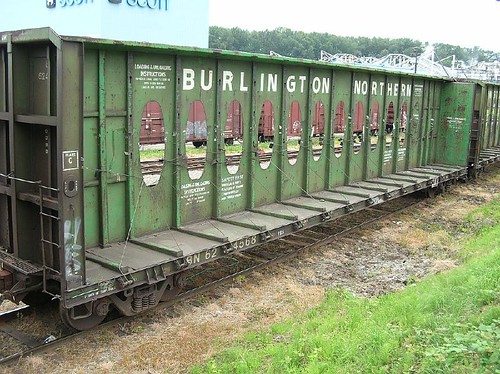
A few days after the radio attempt, P and I were driving near a railroad track and saw a train with many different kinds of cars, including some empty ones whose purpose wasn't clear to us. One turned out to be a lumber car, as we found out today searching online. The other one was also a lumber car, but with an odder design, including lots of oval holes. P mused aloud, "Maybe the empty train cars are carrying electricity to make the train go." This led to a discussion of ways electricity works, with electrons flowing from one point in a circuit to another and creating heat and/or causing work to be done along the way. Having made the telegraph clicker was a good point of reference for that.

P has also been asking to practice math lately. She and T found a memory game played with addition facts (e.g., match "3+4" to "7"), and they both liked that. T asks, "What's three plus three?" and P answers, or I answer; or P and T play the game together. P was very excited to find that game. She's also starting to think about multiplication, asking me multiplication facts from time to time to check her guesses. From what she tells me, I'd say she's building up an idea of multiplication as repeated addition, and it's pretty accurate.

UnschoolerDad scored a coup recently, when he discovered that the game Scribblenauts, formerly for Nintendo DS (which we don't have), had come out for iPad. He immediately bought it and loaded it on our iPads, and all of us have been enjoying it. In Scribblenauts, you can create almost any object you can name. Want a hungry giant? Type it in -- but watch out: he might eat you! Want to fly? Try making a jetpack or a Pegasus to ride -- or P's favorite, giving your character wings. Want to get a lion to go somewhere? Try conjuring some meat for it to eat. Feed a love potion to a monster if you like. Create a bulldozer to push heavy things around, or a backhoe to dig. The coup here, besides the considerable fun, is that this is one of the first things that has both kids wanting to know, asking, and remembering how to spell things, without anyone needing to convince them (as in the past) that using standard spellings might be a good idea. They're also learning the QWERTY keyboard, which is coming in handy in their lives much earlier than it did in mine. They enjoy the puzzle levels, but they play even more gleefully in the freeform sandbox level, where you can create whatever you like and play with it as you choose. Today Petra dug herself an underground cave with a backhoe and shovel. She tried to make it deeper with a jackhammer (she was delighted to know that the first part of that work was the name Jack, as in Jack and Annie in the Magic Tree House books), but she ran up against a limit of the game there.

I've watched a couple of documentaries recently while folding laundry. P and T orbit and play while I do this, sometimes coming to rest and watching for a while. One was an episode of The Planets called "Terra Firma." It covered volcanism and similar planetary activity, such as ice geysers on Europa and plumes of an as-yet-unidentified substance on Triton. This series is written for adults, so when the kids are watching, I stop it frequently to re-explain something that I think they'd find interesting, if they didn't already understand it. Io's constant volcanic activity caught P's attention. After thinking about how very active it was, she asked excitedly (correctly interpreting something the narrator had said), "You mean you could never make a globe of Io that would be good for more than a day?!" Then today she tuned in to a TED talk I was watching about near-earth asteroids, what kinds of damage they have caused in the past, and the tactics, crude and subtle, that we could use to divert a near-earth asteroid that looked like it would actually hit the Earth. She was a little concerned about this possibility, but after I said it was extremely unlikely, she enjoyed listening to the descriptions of diversion methods.

In gymnastics this week, P got scared and shut down for a while when she was asked to hop along the high balance beam. I flagged down her assistant teacher and asked if she needed to come out for a while; she did. I just held her for a few minutes while she cried and talked about wanting to quit after this term, and I reassured her that many gymnasts take a while to get good at things, and that my regard for her doesn't depend on what she can do. She rejoined the class just as it was ending. After class I mentioned to her teachers that she was really frustrated and talking about quitting. They considered some possibilities, like moving her back from group 2 to group 1, but when I told them she'd said she wanted to be able to try things on the low beam before doing them on the high beam, they said they thought they could accommodate that. The next day there was an open gym time available at another local gymnastics school, and when I asked P if she'd like to go, she enthusiastically agreed. At her suggestion, we alternated between working on the beam and playing fast-paced games of her choosing, using a timer for both. She got a lot better at hopping along the high beam, after practicing on the low beam several times. It was great to see her smiling as she did it, and transitioning from wanting me right there, close enough to grab if she lost her balance, to wanting me to stand so far away that I couldn't possibly help, but only watch and cheer her on. I'm hoping that this kind of support will decrease her frustration and enable her to continue with gymnastics if she wants to, since there is a lot she enjoys about gymnastics. We shall see! 

Tuesday, May 24, 2011

Still Waters Run Deep

It's been a quiet week at our house, mostly. The rain just keeps coming down most days, so we've mostly been at home. Although we're doing some reading, playing, cooking, and watching and listening to interesting things, the days feel slow and not very full. But that reading, in particular, really accounts for a lot of time, knowledge, and reading practice! Looking back on our library records and my notes for the week, it hasn't been as uneventful as it seemed.

We are becoming prodigious library consumers. I feel like an extravagant thief, walking out of the library each time with those huge piles of books, CDs, and DVDs, all with no money changing hands! We use the hold-and-pickup-at-our-branch system extensively, as well as visiting the main library every few weeks. We are good about getting things back on time or early, but our library doesn't charge late fees on items from the children's section, so even the occasional late item is free, as long as we don't lose it. This sort of thing is worth the sales and parcel taxes for the libraries, I tell you.

Some borrowed items we've read, watched, or listened to recently:
  • The Way Things Work animated episodes on Wheels and Axles and on Sound
  • An animated version of the Greek myth of Jason's quest for the Golden Fleece
  • Singin' in the Rain, which provided interesting side conversations about how movies are often made on sets, even when the action appears to take place outdoors; the difference between silent films and talkies; sorting out all the movies-within-the-movie; and suspension of disbelief in movies and musicals ("Why is he not using his umbrella?")
  • A DVD on beginning Spanish for kids. I was singularly unimpressed with the attempts at teaching, especially if they're aiming at kids who aren't great readers yet. But P and T watched with interest and picked up a few things.
  • A music and story CD called Mr. Beethoven Lives Upstairs, about Beethoven's life, his music, and the odd habits he had while composing
  • Other classical CDs from the library, which unfortunately were in the wrong cases, so we didn't have much information on the pieces or composers
  • LOTS of books in P's favorite series: Magic Tree House, Magic School Bus chapter books, Fairy Realm, and the Rainbow Magic fairy books. Here's a sampling of topics in Magic Tree House books P's read recently: Leonardo da Vinci, the Great Depression, Carnival in Venice circa 1750, the San Francisco Earthquake of 1906, ocean life, the arctic, the Old West, and Ireland in the early Middle Ages (monks preserving written documents, Viking invasion, and a bit about the older Celtic culture). P also has been listening to The Children of Green Knowe on CD while cleaning her room, and she says she likes it. I like it when a new author squeezes in among the series monopolists, though one could really pick worse series than Magic Tree House!

We've also had chances to learn through everyday experience and curiosity:
  • We replaced some batteries in a toy, so both kids got a look at battery-placement diagrams, how to recognize the plus and minus terminals on a battery, and how to get batteries to fit in their spots.
  • Today when P had a lot of her folded laundry to put away and T kept following her into her room and slowing her down, P had the idea to bring out her toy cash register and play "store" with T. She was buying her clothes from him in the living room, one small pile at a time, then sorting them out into her dresser drawers and coming back for more. T would type a number on the register and P would read it to him (she's getting pretty good at place value up to 3 or 4 digits) and pretend to pay him appropriately. After the laundry was put away, they sorted out the play money, and P showed T what all the different kinds of coins were. Since P just recently got that worked out herself, it reminded me of the medical school mantra, "See one, do one, teach one." I also noticed when I was a tutor, and then a teacher, of physics and high school math, that nothing solidified a piece of knowledge for me like having to teach it to others, especially others with learning styles different from my own. So you can imagine the silent applause for this sibling-initiated game!
  • P noticed moisture on the outside of her cup of ice water and asked about it. I explained condensation (relating it to relative humidity and molecular energy through phase changes, though not in those words), and she got it. Later we made toasted-cheese sandwiches, and P commented that the cheese became a liquid. We talked about observations that would validate that idea (e.g., the cheese flowing downhill or re-solidifying as it cooled), and she was right on. P commented after assembling another sandwich for toasting, "I used my quesadilla skills too." There's nothing like a little metacognition to go with your learning.
  • On our one sunny day, we went to a nearby park where there are paddleboats. P and I went for a ride with her aunt and cousin, and we got a chance to do same pedaling, see the rudder and paddle wheel at work on other boats, and talk a little about how they worked. 
  • T keeps working at his jigsaw puzzles, with and without help, and his spoken syntax is really shaping up beautifully.

And just now, P brought me the cash register with a decimal number on its screen, wanting to read it to me and find out what the numbers after the decimal point meant. Mama like.

    Sunday, March 20, 2011

    Maoris, music, first sleepover, cooking and cleaning

    Yesterday P and I finished watching Whale Rider. We watched it in two sittings, when T was asleep, since I thought parts of it might be a little too intense for him. I love this story of a girl who loves and respects (it seems, from my perspective) the heart of her traditional culture while confronting its sexism and showing the kind of leadership that brings out the best in everyone. And there are many tidbits in it to learn about Maori culture, how traditional cultures can change when they collide with modernity, whales, and probably more I'm not remembering now. I'm glad we watched it, and P liked it.

    I noticed that in the hours after we finished the movie, P did a lot of singing in a bold, full voice that reminded me of some of the singing and chanting in the movie. I hadn't heard such a strong, supported tone from her before. Talk about unexpected learnings!

    Tonight P is having a friend, Q, for a sleepover for the first time. Q is polite and reasonable to be around, but she's a very picky eater. I fixed a healthy dinner based on foods P thought Q liked, but Q ended up eating perhaps a tablespoon of food. P was cranky and didn't eat much either. UnschoolerDad and I enjoyed thinking throughout the evening about how to help the girls have a fun, peaceful time with each other and how to get some food into them. When things got kind of tense and frenetic at one point, we proposed watching a video, which brought the energy down nicely and provided an opportunity for me to put various kinds of finger food in front of the girls and T without saying anything (a strategy I picked up from Sandra Dodd). It all got eaten. When I thought it was probably time to transition from video to winding down for bed, I offered all the kids the choice of another cartoon short or a little ice cream. They chose the ice cream, but P and Q were too full to finish theirs. Tummy and transition victories achieved! Sleep hasn't quite arrived yet, but they're winding down and P is actively agitating for quiet, so perhaps it will happen soon. Hopefully Q won't think P is too much of a stick-in-the-mud. I'm trying, mostly successfully, to keep my cool and help the girls keep theirs. [Edit later: Sleep came quickly, and not as late as I thought it might. Getting ready for bed and winding down seem less difficult when there is a friend to share them with.]

    Getting ready for Q's arrival was interesting. I had asked P to help me pick stuff up so I could vacuum. She wasn't interested in doing that, but she could see that I had a lot to do in the kitchen, so she did do quite a bit. Then she launched into her favorite chore, spot-mopping the floors with a rag. When she tired of that and I was still finishing up with cleaning the kitchen, she asked if she could work on prepping a monkey platter for snacks/the first part of dinner. She did almost the whole thing (cheese, olives, boiled eggs; I cut up some cantaloupe). Her prep skills are really coming along. I appreciated not having to do all the food prep myself. And it's nice for me to notice that P can be very helpful, voluntarily and cheerfully, if I let her take the lead in how she wants to help.

    Oh, and everyone ate that food.

    It's lovely how, if I don't try to force a particular outcome (eating a particular food, doing a particular chore, etc.) but instead just leave the door open, the kids will find their way through the door far more often than I might expect.