Showing posts with label scientific method. Show all posts

Friday, March 16, 2012

Spring Smorgasbord

Spring weather has finally arrived in our area, and our bodies and minds are all over the place. Except in the garden, where I'd like to be preparing the soil for planting; but the kids want to be playing inside today, and so I have time to write.

We've been getting outdoors a lot for letterboxing adventures, learning, and socialization. A non-comprehensive list of our outdoor play:

  • We took our first hike of the season in the nearby mountain park, hoping to find a letterbox at the end of the hike. I was glad we had a goal in mind, because the uphill hike was tiring, and we considered turning around but persisted, thinking (correctly) that our goal was close at hand. On the hike we talked about circulation and surgery: P wanted to know why you can't feel your leg when its circulation gets cut off for a while, so we talked about nerve cells needing oxygen to work; then she wanted to know if you'd have to be asleep for a surgery in which blood flow to a part of the body needed to be stopped. We talked about various kinds of surgeries and which could be done awake or asleep. We saw and identified yucca, cactus, grasses, trees, magpies, and blue jays. We talked about moss, which we saw on some rocks in creeks. The kids enjoyed playing on the rocks across the creek in several places, and building tiny dams of pine needles, sticks, and moss. T is much steadier on his feet than I expected; he was able to cross creeks on rocks easily on his own. Both kids ran joyfully most of the way on the downhill return hike.
  • T went with me for another letterbox while P was at her choir rehearsal nearby. He enjoyed playing with the compass and beginning to learn to use it. He was clear that if he faced north, south was behind him, and vice versa.
  • We visited a nearby park, playing for as long as the kids wanted and then going to find two more letterboxes in the neighboring open space. On that walk the kids played in mud, experiencing different textures and kinds, including pull-your-shoes-off sticky mud. They played in a big puddle/small pond with sticks, stirring up the very fine sediment and noticing how the water looked cloudy, but the individual silt/clay particles were too fine to see. We talked about what kind of rock those sediments would form, given enough time and pressure. I was uptight about the mud at first, but before we went home I had relaxed into letting the kids get as messy as they wanted, knowing we'd be able to clean ourselves up. I was reminded of Ms. Frizzle's slogan from The Magic School Bus: "Take chances, make mistakes, get messy!" That might make a good unschooling motto!
  • At an unschooling park day, P experienced some rejection when trying to join a game being played by several girls near her age, who've played together for months or years. As the afternoon went on, I made some suggestions about how to join their play (learn their names instead of calling them "guys," use questions and suggestions rather than demands, look for opportunities to expand on their game in fun ways, rather than trying to change it), and I came along to try to grease the skids a bit. She did eventually work her way in, providing a tornado shelter for the fairy house they were building, and she played for a long time with one of the girls after the others went home. T also wanted to be in on some of those games, and I worked with him on how to make his way in, too. He was carrying a big stick that one of the girls was worried about, so she was telling him to stay away; but once he put down the stick and came to help, he was more or less welcome.

Through these outings, I was working on my pace and how I handled transitions with the kids. I'm noticing that when I avoid making arbitrary demands (do this, do that, hurry up), the requests or demands that I do make, for real reasons, are met with greater cooperation. There's a "Duh!" element to this, of course, but it's sinking in more deeply for me that when I notice what the kids are enjoying at transition time, rather than focusing on how fast I can get them to do something else, they notice my consideration for them and react better when the time to move on has really (and it helps if it's for reasons they can understand) arrived. They light up when they can share their enjoyment with me and feel seen, along with all their pleasures and preferences about how life goes -- and that helps when their preferences don't work out on a particular occasion.

We had some interesting books from the library:
  • Every Thing On It, a book of poems by Shel Silverstein. These are delightfully attuned to kids' interests, including gross and silly stuff as well as calmer fare. And the segmented nature of the poems lends itself well to bedtime reading, when I'm trying to keep an eye on approaching sleep and stop reading when it's time to doze off quietly. We had one delightful group nap on the big bed, on a day when I felt everyone could use one -- I grabbed a stack of interesting books and said I'd read them to anyone who came along. Everyone was listening within 2 minutes, and everyone was asleep in about half an hour, including me. Yum!
  • Listen for the Bus: David's Story. Both kids liked this picture book about David, a boy who's blind and hard of hearing. The book talks about how kindergarten works for David, including braille and other tactile clues his teachers use to help him navigate his world; and about what David loves most in his life outside school (loud noises, big dogs, hammock swings, riding horses, and more). 

  • To Everything There Is a Season. I was reading a Secular Homeschooling Magazine article about reading the Bible for cultural literacy, and this book came up there as a good start for kids still a little young for some of the Bible's more disturbing offerings. The illustrations are based on the content and style of pictures from a variety of cultures -- Japanese, ancient Egyptian, Aztec, Thai, Indian, and more -- and there is a key to the illustrations in the back of the book that briefly explains both the meaning of the verse from Ecclesiastes on that page, and a bit about the cultural context of the illustration used. P was very engaged in both the text and the illustration key. She did point out, in response the the verse used at the end (Ecclesiastes 1:4, "One generation passes away, and another generation comes; But the earth abides forever."), that the Earth would actually be engulfed in the sun in a few billion more years. We talked a little about how that compares to the time scale of human life.
  • The Magic School Bus Hops Home: A Book About Animal Habitats. This was the book that started our group-nap reading. I like that it addresses both what animals need in real and artificial habitats, and how they might be better or worse off as pets than living in the wider world.


  • Starry Messenger, a book about Galileo Galilei. P, who is already familiar with Galileo's going against church teachings based on his observations of the planets, liked this one. It has the basic story of Galileo's discoveries and his conflict with the church, and also handwritten quotes on every page from Galileo's notebooks, supporting his attitude that science is a better guide than scripture for humans trying to understand how their world works.
  • Hattie Big Sky. We recently started reading this book about an orphaned 16-year-old girl in 1917 who inherits her uncle's unproved claim in Montana and goes to work it and finish proving up by herself. We talked about why damp hands would freeze to a pump handle, what banking a fire means, food and land prices during World War I, why people were suspicious of their German neighbors, rationing, knitting for soldiers at the front, and more.

Other media encounters in the past two weeks:

  • We discovered that new episodes of Phineas and Ferb are being produced and made available on Netflix. P recognized an allusion to the bridge in Monty Python and the Holy Grail in one of them, from my showing her the scene on YouTube months ago. The new episodes are even richer than usual in cultural and literary allusions, which I'm looking forward to unpacking with P.
  • I remembered Paddle to the Sea, a short film I saw as a child, and showed it to P on YouTube. She watched it all the way through, and we talked a little about how the people who found the wooden Indian felt, and why they sent Paddle on his way instead of keeping him. After watching it, we tried making origami boats out of regular paper (which bogged down quickly as the water soaked through) and waxed paper (this floated for 3-4 days with very little change before we needed the space for something else). We talked a bit about water permeability and saw and felt the difference between the permeable and impermeable papers.
  • With St. Patrick's Day coming up, I was thinking about the Blarney Stone, and we looked up the origins of the custom of kissing it, as well as images of how people kissed it before and after the iron railings for that purpose were added. The risk has been considerably reduced from the time when one had to be dangled by the ankles!
  • P asked when Easter would be, and we looked up how it's figured (roughly speaking, it's the Sunday after the full moon that falls on or after March 21, unless you're talking about Orthodox Easter, which uses the Julian calendar, in which the equinox is figured around April 3...) and this year's date.
  • A friend posted this marvelous web site about the scale of the universe, which all of perused at some length. It was interesting, after the pond adventure, to see the particle of silt, just below the size humans can see with the unaided eye. (Note: this site works much better in Chrome than in Firefox.) While I was writing this blog entry and went back to get the link for the site, P got interested again and I needed to give up the computer for a time so she could continue exploring! P discovered that you can click on objects on the site to learn more about them.
  • T spent some time typing on a One-Laptop-Per-Child computer we've had for a long time, and which he sort of knows how to use. He asked how to spell my name so he could type it. He's figured out how to use Shift to get capital letters, and he knows all his capital letters, so he can hunt and peck to type what I say. P took a turn later and wrote some nicely spelled short messages!
The kids asked lots of cool questions. A few of them:
  • "What are animals with pickles on their backs called?" That was T, who at age three doesn't say Rs yet. He was thinking of porcupines. He wanted to play porcupines with P, so he also wanted to know what porcupines ate. (Leaves, twigs, and other plants; in winter, inner bark/cambium. They smell like old sawdust.) We also learned that they turn their rumps to protect themselves from predators, that they cannot throw their quills but release them more easily when frightened, that they may slap with their tails, and that their common causes of death include predation, getting hit by cars, and falling out of trees.
  • "If you looked in a mirror with x-ray glasses on, would you see behind the mirror or inside yourself?" P asked this. We talked a bit about why x-ray glasses wouldn't work so well (setting the depth of field is a problem), but then we looked it up. X rays reflect from mirrors only at grazing angles, so mostly you'd see behind the mirror. But they can "reflect" by Bragg diffraction (constructive interference between reflections from atoms in different layers of a crystal), which makes x-ray crystallography possible. at just the right angle, thus the possibility of x-ray crystallography.)
  • "Why do our teeth curve backward instead of being in a straight line in front?" That was P. I explained it in terms of leverage: just as it's easier to cut near the pivot of scissors, our jaws are more powerful near the joint, so we can chew harder things with teeth that curve backward. So natural selection would favor animals whose jaws had that powerful construction. 

And there was much miscellany:

  • T built some neat, non-tesselated tile designs with the pattern blocks. He also noticed that you could build up the shapes of some pattern blocks using others: three green triangles make a red trapezoid, two trapezoids make a yellow hexagon, etc.
  • We went to a place with a lot of inflated, bouncy structures for one snowy park day. P went from lonely to buddied up (she has since played with those new friends at another park day), and T grew much more confident in his climbing as the hours wore on.
  • P and I looked at photos of fishing flies and lures and talked about how and why they would be useful for catching fish.
  • P was making triangles on a geoboard that happened to be isosceles triangles, so I commented on that and said it meant they had two sides the same. I wasn't sure she was listening, but she piped up, "And one side different." Nice to see comprehension when even attention wasn't a sure thing!
  • P talked about having two and a half fourths of something. I said that I knew what she meant, and drew a circle divided into fourths, with 2.5 of them colored in. Then I redivided the circle into eighths with a different color of marker and showed her how 2.5 fourths was the same as five eighths. We did it with 3.5 fourths and 2.5 tenths as well. I showed her the "giant one" method for converting fractions that I used to teach to seventh graders. That may have been too much to sink in at this developmental stage, but I think P understood the pie charts. The next day P asked about how to divide 7 things equally between 2 people, and she followed the explanation well and reversed the calculations correctly herself.
  • When UnschoolerDad came back from a business trip, we picked him up at the airport. It was a bit of a comedy of errors, trying to reach the right curb on the right level to pick him up; we circled the airport three times. While I drove, we talked about airport security and why we weren't allowed to park long enough for UD to walk to where we were.
  • UD brought home gifts for the kids, including a model F-14 Tomcat fighter plane for T, who has been envious of P's model Blue Angel jet. The F-14's wings swivel back into a smaller, swept-back profile when it goes faster, and we talked a little about why different wing sizes would be desirable at different speeds, especially supersonic speeds (when a lot of vibration would be hard on wide wings, but swept-back wings can withstand it better).

Monday, November 21, 2011

Life Can Be Yummy

Recently, I've felt a fair amount of despair about feeding my family. T, my 3-year-old, is in a very picky stage of his eating life. (Someone I respect said that this preschool-aged pickiness could make a lot of evolutionary sense -- at three, early human kids would have been old enough to start going along with adults who were gathering food. Being too quick to try an unfamiliar food could have had deadly consequences. So I try to be patient.) P is more willing to try new things, but also difficult to please. Even UnschoolerDad has more food aversions than I can deal with very happily, much of the time -- and he'd like dinner to look like a meal, whereas the kids and I can be happy with some pretty ad-hoc stuff, like scrambled eggs, bread, and peas for a meal, or edamame now and soup later. And I'm gluten-intolerant, so my diet can be challenging too. 

I identified something from my heritage recently that made a lot of sense. Someone more familiar with England than I am told me that food there is considered primarily a source of nourishment rather than pleasure. I'm sure this is an overgeneralization, but it rang true for my primarily-British-heritage-on-both-sides family. When I was growing up, I don't think there was much tolerance for picky eating. (My mom reads this blog, so if she tells me my memory is off, I'll post a correction here!) Good food was on the table every night, and we were expected to eat it. It's frustrating sometimes that the family I've built hasn't bought into that utilitarian, stop-complaining-and-thank-the-cook view of food. Money was also a bit scarce when I was little, and waste was frowned upon. In my frugal young adulthood as an underpaid teacher, this translated into a resistance to eating expensive foods regularly or in large amounts -- a feeling that I need to save them for special occasions, sort of like fine china, only more so since they actually get consumed!

So here I was, finding it difficult to meet all our needs and desires with reasonably nourishing food, even after letting go of the more extreme nutritional goals I was striving to meet pretty recently, before T started rejecting so many foods. This week, when I went to the grocery store (by myself after the kids were in bed -- I could get used to that!), I decided to try to get only things that could be part of meals or snacks that I (and my family, I hoped) would call "yummy." Focus on yummy. I tried to get savory yummies (artichokes -- yes, we like them -- interesting cheeses, chicken to barbecue, etc.) as well as some sweet ones. And I got some foods that were more expensive than I usually buy. Since my frustration about cooking has often led to going out to eat more than we can really afford, I tried to base my buying decisions more on a comparison to the cost of restaurant food than a comparison to the cheapest nutritionally similar food available at the grocery store. Even at $5/pound, brussels sprouts (all of us except T love these, roasted with olive oil and salt, and maybe he'll come around after a few more times of seeing the rest of us enjoy them) made more sense than a side order of broccoli at our favorite restaurant, where it works out to something like $12/pound. The meals and snacks made from this shopping trip are meeting with some pretty good receptions so far.

P brought me a recipe recently. She had painstakingly copied it out of a book onto a piece of paper, and she really wanted to try it. It called for spreading frosting on mini-marshmallows and putting sprinkles on top. Sugar on sugar, with more sugar on top, said my nutri-freak brain. But I didn't say no, partly because I wanted to honor the effort she'd put into the recipe. And on this week's shopping trip, I bought the marshmallows and the sprinkles. I couldn't find a prepared frosting that wasn't loaded with trans fats, so I got some spreadable cream cheese instead. P saw the ingredients the next day, and she was delighted! We tried the recipe that day after lunch. Both kids enjoyed it, and they also ate quite a few marshmallows plain. The next day, after having a couple more marshmallows, P said to me unprompted, "I think maybe I am stopping liking marshmallows." I'm noticing this happening as I am freer with sweets than before -- we still have the peppermints, lollipops, and bubble gum that have been available for weeks, since I decided it would be okay to have some sweets around the house more regularly. P still has a few mini-marshmallows or a lollipop now and then, but she isn't eating lots of them. She also reacts with less complaint if I ask her to defer sweets until after a meal or until the next day.

On that same shopping trip, I also bought some cheap imitation-maple syrup to complete the ingredients for an exploration of density that I'd seen on the Dragonfly TV web site. One day after lunch, I just started putting the stuff together -- this caught the kids' attention quickly. I poured some syrup into a big Mason jar, then some oil (which floated on top of the syrup). Then I got some water ready to pour in and asked what they thought would happen. P predicted the water would go on top of the oil and was pleased and surprised when it ended up between syrup and oil. Then I brought some small objects to drop in, and we guessed where each one might go before trying. T loved actually dropping them in, and the kids suggested a couple to add to what I already had. We ended up trying a piece of cork, a piece of plastic, two different kinds of wood, modeling clay, a chunk of apple, a raisin, and a paper clip. We poked each one down to eliminate surface tension and bubbles, and then observed at what level it came to rest. We drew a picture showing all the liquid layers and where each chunk floated or sank in them. I think I'll save the picture and see if, at some point, P is interested in looking up or directly measuring the densities of some of the materials. When we were done with that, P wanted to have a bowl of syrup so she make a model ocean with modeling-clay icebergs. She liked the way modeling clay floated in syrup much as ice does in water: mostly submerged, but with some sticking out on top. Then she asked for some of the cheap syrup to taste; she's had mostly maple syrup at home. She said it tasted really different. I asked if she thought she could tell the difference blind, and she thought so. So UnschoolerDad and I set up a double-blind taste test (I filled and labeled the little bowls and warmed them in the microwave, since the maple syrup had been in the fridge; UD presented them to a blindfolded P to taste.) P could, in fact, tell the difference under double-blind conditions. When she opened her eyes and saw the two samples, she was confused, because she'd expected UD would give A to her first, then B, and the way they looked to her was the opposite of how they tasted, assuming that was the case; but he'd given her B first. She wanted to know why we made it so complicated, so I explained briefly why scientists would use double-blind conditions, to tease out the real differences between things without worrying that the expectations of the test subjects or of those administering the test would influence the outcome. UD and I smelled the two syrups, and we both agreed that the imitation syrup smelled like childhood, and the maple syrup smelled like adulthood!

Another food adventure this week was making Jell-O for the first time with the kids. They've had it at restaurants, but they were very excited to try it at home. P linked dissolving the mix in hot water with our earlier experiment dissolving peppermint candies. The next day; T couldn't remember what it was called, but he persisted in describing it ("I want that thing I don't know what it's called. It's red and squishy. It squishes in your mouth.") until I realized what he was talking about and got it out to eat! It disappeared quickly. We'll see if it gets requested again. Maybe we'll try making it from real fruit juice with pectin next time; I have a recipe for that.

We also tried new foods: Artichokes with a new kind of dipping sauce; pasta with browned butter and mizithra cheese, as UD and I used to enjoy it at The Spaghetti Factory; blueberry-broccoli sorbet, which was a little weird, but much tastier than it sounds (T finished his; P, who saw what went into the blender, did not); and more. And since there are several foods everyone likes that can be made in a slow cooker, but my sad, cheap old Crock Pot from 15 years ago was ruining some of them, we bought a new slow cooker this week. Much better!

Not everything we do is related to food or candy. We bought an electricity "invention" kit a while back, when there was a sale at Barnes and Noble. Recently P's been asking to make things with it, and we found time to build a telegraph clicker (elecromagnet plus switch plus paper clip close enough to click over to the electromagnet when the switch is closed). I talked with P about how, if we left the circuit closed for a long time, the D cell we were using to run it would run down quickly, since there was very little resistance in the circuit. When we'd exhausted the considerable fun of playing with the clicker, trying it as an electromagnet, learning a few letters of Morse code, and playing "name that tune" by clicking rhythms, we tried putting a small light bulb in series with the clicker. The light lit up beautifully, making it easier to distinguish dots and dashes in Morse code. Then we noticed that the clicker didn't work when the light was in the circuit. I realized this was because of the added resistance of the bulb, and explaining this to P meant talking about how an incandescent light works, which has come up since then when P asked about what different kinds of lights existed. Later in the week, UD tried building the radio in the set (a simple LC oscillator hooked up to an earphone) with the kids, but it only picks up a little static, and only in what seems like an unlikely position for the adjustable capacitor. We may try rebuilding the capacitor in a different size, or with a different dielectric (UD chose black construction paper), or just debugging the circuit for unintended electrical contacts. We also wonder whether the diode provided has too high a resistance for the non-powered circuit; but we haven't tried any of these solutions yet.

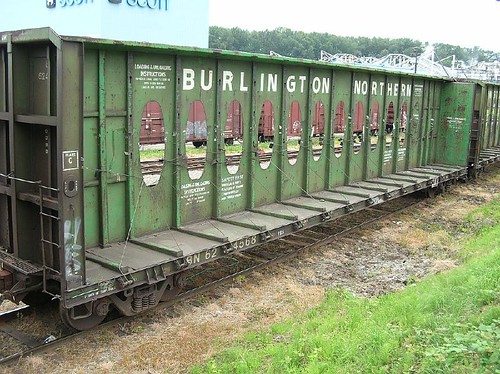
A few days after the radio attempt, P and I were driving near a railroad track and saw a train with many different kinds of cars, including some empty ones whose purpose wasn't clear to us. One turned out to be a lumber car, as we found out today searching online. The other one was also a lumber car, but with an odder design, including lots of oval holes. P mused aloud, "Maybe the empty train cars are carrying electricity to make the train go." This led to a discussion of ways electricity works, with electrons flowing from one point in a circuit to another and creating heat and/or causing work to be done along the way. Having made the telegraph clicker was a good point of reference for that.

P has also been asking to practice math lately. She and T found a memory game played with addition facts (e.g., match "3+4" to "7"), and they both liked that. T asks, "What's three plus three?" and P answers, or I answer; or P and T play the game together. P was very excited to find that game. She's also starting to think about multiplication, asking me multiplication facts from time to time to check her guesses. From what she tells me, I'd say she's building up an idea of multiplication as repeated addition, and it's pretty accurate.

UnschoolerDad scored a coup recently, when he discovered that the game Scribblenauts, formerly for Nintendo DS (which we don't have), had come out for iPad. He immediately bought it and loaded it on our iPads, and all of us have been enjoying it. In Scribblenauts, you can create almost any object you can name. Want a hungry giant? Type it in -- but watch out: he might eat you! Want to fly? Try making a jetpack or a Pegasus to ride -- or P's favorite, giving your character wings. Want to get a lion to go somewhere? Try conjuring some meat for it to eat. Feed a love potion to a monster if you like. Create a bulldozer to push heavy things around, or a backhoe to dig. The coup here, besides the considerable fun, is that this is one of the first things that has both kids wanting to know, asking, and remembering how to spell things, without anyone needing to convince them (as in the past) that using standard spellings might be a good idea. They're also learning the QWERTY keyboard, which is coming in handy in their lives much earlier than it did in mine. They enjoy the puzzle levels, but they play even more gleefully in the freeform sandbox level, where you can create whatever you like and play with it as you choose. Today Petra dug herself an underground cave with a backhoe and shovel. She tried to make it deeper with a jackhammer (she was delighted to know that the first part of that work was the name Jack, as in Jack and Annie in the Magic Tree House books), but she ran up against a limit of the game there.

I've watched a couple of documentaries recently while folding laundry. P and T orbit and play while I do this, sometimes coming to rest and watching for a while. One was an episode of The Planets called "Terra Firma." It covered volcanism and similar planetary activity, such as ice geysers on Europa and plumes of an as-yet-unidentified substance on Triton. This series is written for adults, so when the kids are watching, I stop it frequently to re-explain something that I think they'd find interesting, if they didn't already understand it. Io's constant volcanic activity caught P's attention. After thinking about how very active it was, she asked excitedly (correctly interpreting something the narrator had said), "You mean you could never make a globe of Io that would be good for more than a day?!" Then today she tuned in to a TED talk I was watching about near-earth asteroids, what kinds of damage they have caused in the past, and the tactics, crude and subtle, that we could use to divert a near-earth asteroid that looked like it would actually hit the Earth. She was a little concerned about this possibility, but after I said it was extremely unlikely, she enjoyed listening to the descriptions of diversion methods.

In gymnastics this week, P got scared and shut down for a while when she was asked to hop along the high balance beam. I flagged down her assistant teacher and asked if she needed to come out for a while; she did. I just held her for a few minutes while she cried and talked about wanting to quit after this term, and I reassured her that many gymnasts take a while to get good at things, and that my regard for her doesn't depend on what she can do. She rejoined the class just as it was ending. After class I mentioned to her teachers that she was really frustrated and talking about quitting. They considered some possibilities, like moving her back from group 2 to group 1, but when I told them she'd said she wanted to be able to try things on the low beam before doing them on the high beam, they said they thought they could accommodate that. The next day there was an open gym time available at another local gymnastics school, and when I asked P if she'd like to go, she enthusiastically agreed. At her suggestion, we alternated between working on the beam and playing fast-paced games of her choosing, using a timer for both. She got a lot better at hopping along the high beam, after practicing on the low beam several times. It was great to see her smiling as she did it, and transitioning from wanting me right there, close enough to grab if she lost her balance, to wanting me to stand so far away that I couldn't possibly help, but only watch and cheer her on. I'm hoping that this kind of support will decrease her frustration and enable her to continue with gymnastics if she wants to, since there is a lot she enjoys about gymnastics. We shall see!