Showing posts with label measurement. Show all posts

Tuesday, January 17, 2012

Chores, Choices, Chromosomes, Contact, and Crystals

I seem to have reorganized part of the inside of my head. This is hard to show pictures of, so here's a crystal tree to keep you going:


I recently finished reading Sandra Dodd's Big Book of Unschoolingwhich I bought from her at the Always Learning Live unschooling symposium. Lots of it was familiar from reading on her website; the book is a sort of snapshot of the web site from 2009. But there were many parts I hadn't seen before. One of them involved chores such as housecleaning. Sandra wrote that one of the principles they try to live by at her house is, "If a mess is bothering you, YOU clean it up." Really? Even if someone else made the whole thing? Even if I know who it was? This was in deep conflict with my existing ways of thinking about parenting. But it also resonated with some of what I'd heard at the symposium from other parents, and it sounded good, especially to my inner kid. I decided, provisionally, inside my own head, to try it out for a while. If P's room was really messy and bugging me and she didn't want to clean it, I'd spend some time on it myself. (This took some convincing of P the first time; she thought I meant to go in and get rid of things because she wouldn't clean them up, a sad memory from our older ways of doing things. We're still working on rebuilding trust from that sort of thing.) If the living room was too messy, I'd spend some time on it. (The living room is often a hard one to assign responsibility for anyway, since many people's messes intermingle there.)

I found that cleaning P's room by myself felt entirely different from cleaning it with her, in a good way. I didn't feel I had to teach her or somehow entrain her into doing it correctly on her own. I was just doing it, seeing it as my own project. I put things where I knew they went, or if I wasn't sure, I left them in a little pile in the middle of the room, so P wouldn't have a hard time finding them later. I enjoyed seeing what P was playing with and what kinds of juxtapositions she had made. I made some judgment calls I felt comfortable with as far as what bits and pieces to keep and what to recycle or throw away; and with some effort, I avoided the passive-aggressive urge to throw away more than P would, since I (!) was the one doing the cleaning. I felt at peace in that I was simply doing the task that I felt needed doing, not trying to get an unwilling other person to do it. I did feel a little irritated the next day, when most of what I'd cleaned had been messed up again. But I continued trying to be honest with myself, internally, about whether it was bugging me and why, and cleaning up when it felt like that would make my world better; and the irritation has passed for now.

In the rest of the house, focusing on tidying up and cleaning because I, personally (not some external arbiter or internalized voice in my head), would like things to be neater or cleaner, has had interesting effects. Parts of the house get a little messier than they used to, at least for a while. Other parts are cleaner. The kitchen looks great; I use it every day, and it really makes a difference to me when it's clean and ready to use. The bathroom is clean; I like using a clean sink and toilet and looking in an unbespattered mirror. I either put others' laundry away, feeling I'm giving them a gift and/or making my world better; or I wait until I can feel that way about it, or until they put it away themselves, whichever comes first. The living room only bothers me sometimes, so it gets picked up less frequently. Yesterday I saw UnschoolerDad walking across pieces of trash on the floor (there had been a pretend game involving lots of paper tickets or something) and asked him if it bothered him to be doing that. He said yes, and I said it was bothering me, too, so how about if we cleaned up? In about 10 minutes, the living room was looking great, and we were both feeling better about it. There was no browbeating the kids. Okay, we did tell them there were a few paper playthings we'd have a hard time telling apart from trash, so if they wanted to keep them, they should pick them up. Mostly they didn't care; the fun had been in making the things, more than in using them past the first couple of days.

Would I want my kids to sit, unheeding, while I clean up their messes, forever? Nope. I'm not there yet, if indeed I ever will be. And I still do ask them to clean up some of their own messes (used tissues, and sometimes things I let them get out on the condition they would clean them up), though I try to let them have some say in the timing. I reserve the right to change where I draw the lines. But for now, I find cleaning up by myself much faster and less stressful than making the kids do it with me. And I don't think the kids are benefiting from my making them clean up. I think they're learning to resent it, and that their resistance to helping is likely to get worse, not better, unless and until they have their own reasons for wanting things cleaner or for helping me. (Empathy is not a strong point of their current developmental stages, but that won't be true forever.) Sure, by being made to pick up trash and put toys away, they learn how to do those tasks, but they aren't rocket science. It's easy stuff to figure out, and T (who has had far less required of him at age 3 than P has at ages 5-7) does tidy up spontaneously now and then. They do enjoy certain kinds of cleaning, like scrubbing the floors, if I let them choose when to do them. One unschooling writer, Joyce Fetteroll, often has unschooling moms consider whether what they're telling their kids is okay, by imagining their husbands saying the same things to the moms. I would be pissed if UnschoolerDad tried to tell me when to scrub the floor, or that it was time for me to pick things up off the floor right now, while I'm in the middle of writing a blog entry. If there were a good reason I could understand (if someone on whom we wanted to make a good impression were on their way over, say, or if he would be willing to vacuum if the floor were tidied up before he had to go do something else), I'd be on board. But I'd have to understand it, or at least trust his reasoning. When the chores required and the times for doing them are arbitrary as far as they're concerned, it's hard for the kids to get on board.

What many parents of older unschooled kids say is that, once the parents switched from requiring kids to do chores to doing them cheerfully themselves, the kids first kicked back for a while as they came to trust they wouldn't be forced to work, and then started pitching in fairly frequently without being asked, or even going beyond the original scope of work to do other chores they noticed needed to be done. I can hope for that. But I think that if I fix that in mind as my goal, it will lead to more of the same old resentment if it doesn't pan out on whatever schedule I have in mind, or for a particular task. So for now, I'll keep trying out the theory that chores won't be hard to learn when the kids are ready, and that doing them myself preserves more peace for me and everyone else than trying to conscript the kids into doing them. The more I can let go of my angst and resentment around chores (and I have had plenty), the more attractive helping me will look. We'll see how it goes.

I've continued trying to think in terms of two choices -- think of at least two ways to handle a given situation, and choose the one that matches my goals better. I've talked with P a little about this, too, to help her handle times when she's exasperated with T. It's sinking in a little. "Did you make a choice?" is becoming a useful question between us.

I saw a great TED talk this week and shared it with P and T. It's about scientific visualization of molecular processes within the human body. It had amazing visuals of DNA folding into chromosomes, and of mitosis, especially the part where microtubules pull one duplicate set of chromosomes to each end of the cell, forming two new nuclei. P enjoyed it, too. We paused a lot to talk about the basics (DNA replication, chromosomes, cell division, etc.). T, who watched most of it with us, asked at one point, "Is that going on in my body right now?" Yes, everywhere, my dear! I love it!
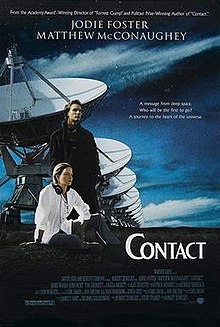
P watched large portions of the movie Contact with me this week. She wasn't much interested in all the talk and arguing about scientific funding policy in the beginning (no surprise), but once the prime numbers started coming in over the Very Large Array in New Mexico, she was pretty well hooked. We paused to talk about ham radio and some of its conventions, the Search for Extra-Terrestrial Intelligence (SETI), what prime numbers are, and why hearing them on a radio telescope would indicate a transmitting intelligence.

Before I get to crystals and everywhere they took us, here's a brief roundup of other highlights. There's a notable lack of anything involving leaving the house here, since we're still convalescing from the flu.
  • I made a new robe for P this week. In the process, I showed her a few things about garment construction and how to use a sewing machine. She's not super-interested in machine sewing yet, but she listened and took it in, and she hand-sewed herself a little purse that day.
  • P and T were playing a pretend game based on SuperWhy at one point (the SuperWhy board game was a total bust for actual game play, but the game pieces inspired extensive pretend play!), and when P tried Princess Presto's line, "Cue the sparkles! Cue the music! Princess Presto to the rescue!" only she said, "Do the sparkles! Do the music!" I realized she was missing the word cue. We talked about what cue means in stage and screen productions. With all the pretend play, this was right up P's current alley.
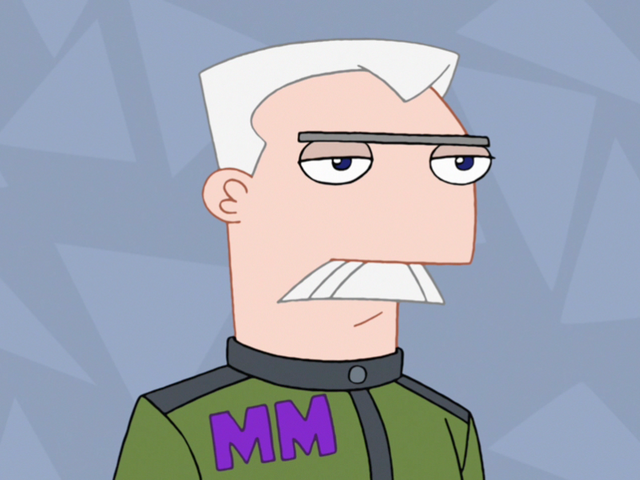
  • P was looking with me at an online gallery of art-history references from The Simpsons (which she doesn't yet watch, but the gallery was linked on an unschooling list) when we saw a portrait in the style of Pablo Picasso, complete with too many eyes showing in a profile portrait. P remembered that Major Monogram on Phineas and Ferb is always shown the same way:
  • I showed everyone a video I found a while back of a vortex cannon (air cannon) being used to blow down structures made of straw, sticks, and bricks. That was fun! 
  • The kids and I watched Toy Story 3 together. This was mostly simple fun, but we did see a way that magnets could be used to sort ferrous metals out from trash, and the kids learned what an incinerator is. There was also some Spanish music and dance toward the end, when Buzz Lightyear got reset.
  • One morning, both kids were measuring everything with retractable metal tape measures. P told me a certain laundry basket was 13 inches across. I asked how many of those it would take to equal her height. (She's been telling me about some math of about that difficulty that she's doing in her head.) Rather than try the numbers, she started measuring 13-inch segments up her body, concluding that about three and a half of them fit within her height. I like her sense of what division means, there.
  • T has been having a lot of fun playing with my decommissioned electric toothbrush; seeing what the moving parts are and how they connect, seeing what kinds of noises it can make, changing brush heads, feeling the brush against his hand, enjoying the vibrations, and so on. 
  • P said something about platypuses being the only egg-laying mammals (monotremes). I thought I remembered otherwise from a museum exhibit, so we looked it up. We found out that four species of spiny anteaters (echidnas) share this distinction. And we found out the "mono" in "monotreme" comes from the fact that eggs, solid and liquid wastes all exit through the same cloacal opening. Guess it's a good thing those babies are inside protective shells, eh?
Okay, now for the crystals! This morning I got out a "Mystical Tree," which I bought recently on a toy store run with P. We set it up and got it growing. The finished product, after 6 hours, is shown at the top of this post. Here it is halfway through its growth:

I warned the kids not to touch the liquid, and then wondered whether my warnings were too strong. So I looked up the main ingredient, monopotassium phosphate. Yes, it's an eye, skin, and lung irritant -- and it's used in fertilizer and Gatorade! Okay then; I started thinking about other crystal-growing experiments the kids could be more hands-on with. I remembered making rock candy by growing sugar crystals in elementary school. So I heated up some water, dissolved a whole lot of sugar in it, and put it in two pint jars with wool yarn hanging down into them from craft sticks on top, below:

Then I got to thinking -- was that really enough sugar? I looked up a recipe for doing this and found that I'd put perhaps a third as much in as I should to saturate the solution. P watched as I boiled the solution again and put in more and more sugar, and always it dissolved out of sight. We talked about how the sugar molecules were associating with water molecules, and how we wanted to get to the point where every water molecule was doing all it could to dissolve the sugar molecules, with none left over. The dissolving got slower and weirder-looking (floating islands of granulated sugar, anyone?) until finally the solution wouldn't take any more and went all grainy. We added tiny bits of water until things dissolved again, and then re-jarred the solution to sit overnight. I gave the kids each a bit of the saturated sugar syrup in a bowl to feel and taste, and meanwhile I browsed online for other ideas. I found a page about making a Borax snowflake. P decided to try it with a spiral shape, which she made, below:

This time she did the stirring-in (only about 4.5 tablespoons of borax would dissolve in our jar of water, compared to more than 2 cups of sugar!), enjoying the swirling clouds of borax that slowly dissolved away, and the musical notes the spoon made against the jar. The jar was getting a little overfull, so I took out some water, and we found the notes got higher -- it seems the water, not so much the jar, was what determined the functional size of the resonator. After we put the jar up to cool and sit overnight next to our hopeful rock candy and (just for comparison) my weaker sugar syrup (I'll post photos of the finished crystals next time), we watched YouTube videos of glass harp music. I tried to show P how to play by rubbing the edge of a glass, but most of our glasses are too massive to vibrate well that way. We tried filling up a few with different amounts of water and striking them, but we could only get a range of about a fourth in those chunky glasses. One delicate glass teacup did allow us to stroke its edge just right to make a note of sorts. But it was nothing like the wine glasses in this Toccata and Fugue in D minor:


After a while, though, hearing Bach on wine glasses is like watching a bear dance: It's not that it's that the bear dances wonderfully that holds your attention, but that it can dance at all. So we looked up an organ version of the Bach and found this lovely video:


The piano-roll-style digital notation here is wonderfully intuitive, whether you read music yet or not. We listened to several pieces more by Bach, Beethoven, Chopin, Debussy, and more with similar visuals, enjoying the interplay between sound and sight and the artistry of the varied visual representations we found. P gave us the play-by-play for those pieces included in either version of Fantasia (1940 or 2000), but she also watched with total attention through Bach's entire Cello Suite No. 1, which isn't in either movie:


This exploration also led to watching videos on how a harpsichord works, discussing the differences between harpsichord and piano, and making a mallet from a skewer and rubber bands to try on P's lap harp. She says it sounds a little like a piano.

And if that isn't a nice excursion of ideas from a Mystical Tree, I don't know what is.

Friday, October 7, 2011

A Complex, but Robust, Balance

A little over a week ago, I was waiting during P's gymnastics class and sitting next to a parent I know and his daughter, who's in third or fourth grade. She was working on a school assignment, and he was clearly anxious for her to make as much progress as possible during her sister's gymnastics class. He was pushing hard, and when she resisted (she seemed tired and not interested in the assignment), he moved on to belittling statements and questions. I was feeling really awkward, since I don't know this family well enough to have a good defusing intervention ready. I was glad when a relative of his came along, saw the stress, and talked to him long enough to give his daughter a break. But during that interaction, a funny thing was happening. I had an unschooler's voice in my head with an answer to every word out of his mouth. A lot of the answers had to do with this assignment being too involved for its purpose. She was supposed to draw several pictures representing events in a chapter book she'd read, then write several sentences about each picture. And he was having her do a rough draft, in preparation for a more perfected final draft later. This project, taking hours of her life, would probably have an audience of one -- a teacher, probably bored with grading 25 similar assignments. This girl was tired and in no way primed to be doing creative work, especially on a project not of her own choosing. Oh my gosh, I could go on and on.

But the other thing happening was that I could hear myself, a year ago (before I started thinking about unschooling our kids) and in some cases more recently, saying many things similar to what this dad was saying. It was painful to hear, both that way and in the moment for the daughter's sake. But it helped me see how far my thinking had come on what was useful for learning. It made me intensely glad I wasn't having to flog my own kids through long, involved school assignments in which they had no interest -- this seems like the surest way to produce adults with no interest in reading, writing, creativity, or whatever is being forced. And for the first time, I felt a deep sense that we were on the right path. I was high for days, and it was hard to tell anyone, since most of the non-parents I know wouldn't get it, and most of the parents with kids in school would feel bad. I finally got to tell it a week later at an unschooling park day, where it made no splash -- these parents already know this stuff -- but it felt good. I feel I'm finally starting to find my balance and stride as an unschooling mom. And as the rest of this entry will reflect, it's a balance with a million little parts, like a huge Alexander Calder mobile. It looks like it shouldn't work sometimes, but it's actually quite sturdy, and the whole picture created is so beautiful.

Today I read a John Taylor Gatto essay, "The Six-Lesson Schoolteacher," in which Gatto enumerates the soul-crushing, conformity-enforcing lessons of school that make it an efficient way of producing interchangeable parts of a permanent underclass. The essay built on the feelings of that gymnastics-class episode, and added the feeling that my evolving beliefs about how learning happens have ruined me as a future classroom teacher in any conventionally structured school. This is probably fine. But if I'm looking at going back into education (I taught public and private school for a few years here and there), I'll be interested to read more about Gatto's free school, and whether what he does there reflects a very different vision of school.

In other school-related thoughts, I read something this week on my favorite unschooling email list (AlwaysLearning) about how kids in school often learn to bluff their way through, appearing as though they know more than they really do -- and that this translates into being reluctant to ask questions. This resonates with my own experience of school (though I also sat near the front and asked lots of questions by the time I got to grad school, having decided there was something I wanted from school other than looking good to my instructors), and it totally fits with my observation that P has become more willing to ask questions -- about all kinds of things -- the longer she's been away from school. I love that she asks questions, and it shows; I'm sure that helps. Now the value in bluffing by avoiding questions is gone, unless she's so engrossed in something (a good story, say) that she doesn't want to interrupt it with a question and answer. When I listen to the rhythms as UnschoolerDad reads to P from the Song of the Lioness series, which they are both enjoying and have almost finished, I hear lots of pauses for questions about unfamiliar words or about why the story is unfolding the way it is.

These last two weeks have been curiously lean on notes to add to this blog, and yet I have the feeling that learning is happening at a terrific pace. It's an odd feeling, probably rooted partly in the fact that both kids have sources of information beyond my direct knowledge and control, including books, videos and games they're experiencing without me right by their sides. Sometimes that learning surfaces, as when P spotted the title of a sci-fi novel I'd just picked out from the library (Galileo's Dream) and asked about it -- it turned out that the PBS Kids show Martha Speaks (note: this link makes noise!) had included a segment on Galileo, from the apocryphal point of view of his dog, who'd inadvertently inspired some of his discoveries about physics. We talked a little on the walk from the library back to the car about Galileo's contributions to science, and also his heresy trial, and we talked about how the Galilean moons (the biggest four moons of Jupiter) were all eventually named for people Zeus (aka Jupiter) had abducted or otherwise misappropriated -- we looked them up later at home to find the story of each. Unlike P's knowledge about Galileo, some of what the kids are learning may never become obvious to me. Still, though, there's been a lot of learning I could observe and participate in.

On a car ride somewhere, UnschoolerDad was saying something about Sputnik, and T asked what a satellite is. We talked a little about natural and human-made satellites, and about how some satellites send pictures of the earth from above. In a short internet search for information about satellites, I ran across a photo of an infrared astronomical satellite whose data I had crunched a bit during a summer astronomy internship in college! Later, the kids and I used Google Maps' satellite view to look at a lake nearby where we've played, at our house, and at the houses of some family and friends. We followed our walking routes on streets on the map, from our house to places nearby that we knew, using what we knew about each place to find exactly the right houses -- a beautiful way to relate maps to reality. Then, at T's request, we followed the railroad tracks from where we usually see them to the southeast until we found a train. That took a while! T has continued asking where things are on maps -- he now has Colorado located on the huge world map that was a gift from grandparents this year, and several times a week he asks what something on that map or some other map is. P has asked fewer questions about geography so far (though as I edit this post, she is poring over maps and asking me questions about places she sees on them), but she follows along, and sometimes she and T make up adventures in which they sail or fly between distant points on the world map, following tortured routes. I think I'd like to find some maps at different scales showing where we live, from the city level to the region, so we can trace our travels together on a finer scale than a world map provides.

While we were mousing around Google Maps, we were also building a matchbox-like container from cardboard to be a dresser drawer for a doll (this involved drawing patterns on graph paper and estimating how much extra size the outer layer would need -- we estimated a little tight, but P adapted the technology to make many doll-size treasure chests and wastebaskets with lever-action lids, which T gleefully filled with tiny bits and bobs) and letting white glue dry on the pad of my finger so the kids could see the fingerprint after it was peeled off. They liked seeing the stages of drying and feeling the roughness of the fingerprint-impression. This mixed-up day was one of the best in my memory for following the kids' desires where they led.

Last night we spent the evening at the library, as P read the last third of a chapter book she really wanted to finish that was due that day, and T played with the puzzles and looked at board books in the kids' area. I got more time than usual to browse the kids' books for interesting stuff, and came up with three books I thought would catch P's interest. They were all quite successful; P was engaged, making links to prior knowledge and taking in new information, even pointing out inconsistencies between text and illustrations that were relevant to the stories.
  • Giants in the Land is about the giant pine trees that used to grow in New England, and how they were harvested to make masts for the British navy. At the end of the story, 1775 brought the end to the shipping of American mast trees to England; this meshed with Revolutionary War on Wednesday, a Magic Tree House book P recently read on her own.
  • Shibumi and the Kitemaker is a wonderful view of the class disparity in an imaginary feudal society similar to imperial Japan, and how the emperor's daughter decided to change the squalor and suffering in the city surrounding her walled garden. P and I talked briefly while reading it, about how feudal society was structured, and how there is still class disparity and concentration of wealth under capitalist systems. 
  • Songs from the Loom: A Navajo Girl Learns to Weave gave a culturally-grounded view of some of my favorite crafts, spinning and weaving. It included some of the Navajo stories related to weaving and described the processes at a perfect level for P to absorb (though I, as a weaver, wanted more detail about how the loom worked -- but that's information I can find!). It also included a brief history of the Navajos' being expelled from and later regaining the rights to their ancestral lands in the Four Corners region, with associated information on Navajo-U.S. relations and tribal governance. In several more years, P may have a chance to go on a yearly trip to tribal lands in this region with youth and adults from our church. I hope that some grounding in Navajo and Hopi culture will make that a welcome and rich experience for her. [Note Oct. 15: just noticed and corrected some sloppy editing in this paragraph. Sorry about that!]
In my previous post I wrote about P wanting to set up in the driveway and sell stuff. One Saturday morning recently, she decided she wanted to set up a free face-painting booth in the driveway. We were in good shape to hang out, so she did. I showed her how to clean the face crayons with alcohol between faces to prevent passing germs; she made a sign and gathered her materials, and then she went out to sit. I took a book out to her to pass the time on our oh-so-out-of-the-way street, though mostly she looked around at squirrels and such so she wouldn't get too absorbed in her book (her phrasing! I love this kid!) and miss a person going by. T went out to sit with her after a while. As no one continued to come by, they got interested in crushing rocks to powder with harder rocks, and drawing on the driveway with rocks, to see what kinds of colors they could get. After a couple of hours and zero potential customers, P decided to close up shop. She'd had a good time, and she hasn't yet asked again to set up a garage sale. It felt good to me to support what she wanted to do without trying to reshape it too much (but after being her ally by telling her what information I could about what it might take to succeed). And the little geology lesson was an unexpected bonus. We tried mixing the rock powders with water and found the resulting paints unsatisfactory. We may try making milk paints or oil paints from crushed rock at some point.

Other recent highlights:
  • P spotted an articulated bus and tried to point it out, but she ended up saying "crenellated" instead. I said "articulated" so she could remember the word she wanted, but then it led to a discussion of medieval fortifications, with photos on the Web when we got home. In an unusual moment, P said of crenellated, "Thanks for teaching me that word, mama!"
  • P asked for some big paper to put up on the wall so she could write down word families to show T. She misspelled some of them, but she let me write the correct spelling of one word per family so she could correct them all. It was fun brainstorming words in each family and noting some homonyms (e.g., code doesn't belong in the family with toad and road.)
  • T continues to ask lots of questions about what sounds letters make, what words say, how to spell words, and how to write letters. I gave him a composition book with big triple lines for writing. He can't use the lines very well yet, but he likes it when I take story dictation from him and write it down, and sometimes he asks me to guide his fingers to write a letter. Today as we settled down for a nap together, I was reading a novel, and T asked me to read it out loud to him. He seemed to enjoy it even though I was pretty sure he didn't understand much of it. At a couple of points he pointed with his finger, following along as if pointing at what I was reading, though he was on the opposite page. I took his cue and pointed where I was actually reading. He asked about the page numbers and how to say them (e.g., 63 is sixty-three), and also about how to pronounce combinations of letters he could see on the page. He also loves Super Why (noisy link), a PBS Kids series about letters, spelling, and reading.
  • Both kids are enjoying watching Word Girl on Amazon video. Recently P watched several episodes while I folded laundry and watched with her. After some episodes we'd check and reinforce the meanings of the words emphasized. Some of these check-ins also led to discussions of civics concepts like candidates and elections (one episode included a student council election and a local election for District Attorney) or literary contexts like a school Shakespeare play.
  • Both kids are also enjoying Sid the Science Kid (another noisy link), which we find on Netflix. It's very schooly, but they find the information interesting, and some of it (the importance of brushing teeth and balanced nutrition, for example) is helpful in the family.
  • UnschoolerDad found the Toontastic app for iPad, and P has been making some of her own cartoons with it. It prompts for different parts of the story arc and provides music choices authors can pair with their cartoon scenes. It's fun to see the kids becoming multi-literate in different computer platforms -- touch-screen tablets, laptops, iOS, Windows, Android -- I get the feeling they'll be more comfortable than I am with a lot of technology before long.
  • P and I did the experiment of filling a bowl to the brim with ice and water, and then watching the water level as the ice melted. It stayed the same -- water really expands a lot when it freezes. We'll see more of that in our environment as winter comes; yesterday I winterized the swamp cooler, and P asked why, so I talked about water pipes bursting or the swamp cooler reservoir cracking if we leave water in them during freezing weather.
  • P and I found about four different ways to think about the question, "How many cups are in six quarter cups?" (we've done this before, but we found more ways this time) as I was cooking some quinoa recently. She's doing these little math-storms with me much more willingly than she used to, with almost no anxiety. It's good to see.
And then there's daydreaming. P recently said she'd like to have a whole room full of cool stuff she could use to learn. With a gate on it to keep T out. T has mastered baby gates, so that's not going to happen, but I sympathize with the desire to have more stuff -- electrical parts, microscopes, Cuisenaire rods (whether they use them for math or not, these were great fun for me as a kid for their catapult-building potential, and I still think of short distances in centimeters easily because of them), more kinds of building toys, and whatever else we can think of. It's fun to daydream of what we can do when we have an income again. Until then, there are bargains, libraries, free museums, and many possibilities afforded by our existing possessions. T's current favorite is a hand-cranked popcorn popper with conical gears on top for turning the stirring rod. Good stuff.

Wednesday, July 27, 2011

...Aaaand then it got rich again.

We go along and have these lazy days and weeks, and then things take off again. Here we go!

The kids and I watched a couple of TED talks online together this week. One was about flowers and the tricks they've evolved to play on their pollinators. P, who is beginning to understand the role sex plays in reproduction with humans and animals, was ready to enjoy this and has mentioned it to me unprompted since then; she remembered the flowers that smell like carrion, enticing blowflies to come in and lay their eggs there, meanwhile getting coated with pollen for other such plants. The other was about a new ultralight robot that flies like a bird, flapping its wings. That had the whole family grinning from ear to ear, probably all for different reasons, but it was delightful and memorable nonetheless.

P and I also watched some old TV together online. We watched the first few episodes of Star Trek: The Next Generation, which has always been my favorite Trek series (though the first season is a little hard to take!). P referred to some of the technology in the show (e.g., transporters) as magic, so we talked about the nature of science/speculative fiction as the creator's idea of where science and technology could go in the future, and how that might change the world and the ways people interact. Of course it also reminded me of the Arthur C. Clarke quote, "Any sufficiently advanced technology is indistinguishable from magic," and I shared that idea with P as well. 

A library book, Twelve Snails to One Lizard, was a fun story about the nature of measurement and why measurement tools are so useful; and it repeated some key numbers for the English system and some arithmetic enough to let them sink in a bit.

We watched The Secret Garden on DVD and talked a bit about the British empire (the movie is set near the time of its greatest extent and begins in colonial India, and a map puzzle the children assemble in the movie provides a great visual for that). A day later, P asked me if it was a real story. I said no, I thought it came from a novel. She asked me how you could make a movie that wasn't a real story. In hindsight, maybe she thought that true-story movies were actually filmed in real time -- I'll have to ask her. But it led to a great exploration on YouTube of making-of videos, particularly for a Transformers movie that we haven't seen, but that was beautifully documented on YouTube. We saw an outdoor set, complete with beautiful building facades and plain-as-dirt, unfilmed backsides with security guards keeping folks off the street during takes. We saw cameras on cranes, cameras on go-karts, and cameras on trucks outfitted with cages to protect them from flying cars in chase scenes. We learned how a scene in which a giant robot ripped a bus in two was filmed -- not in miniature, but with exploding bolts and air cannons to blow the bus apart, and CGI robots inserted later. We saw gas flames turn on near destroyed cars just before "Action!" in a street scene. We also saw some stop-motion videos that Transformers fans had made themselves. Maybe we'll talk more another time about screenwriting, acting, directing, editing, and more. Maybe we'll go to Universal Studios sometime. It was a lovely trip behind the curtain today, though.

In the car on the way to the science museum today (more on that below), P started writing a get-well-soon card to a relative. I've explained that this relative may have a harder time than most folks with unconventional spelling or messy (or overly fancy) handwriting, so P was careful to check her spellings with me.

And the museum. I could write pages and pages just about the 5.5 hours we spent there today. Here are some highlights:

  • A "Real Pirates" exhibit documented the history of the Whydah, discovered off Cape Cod after a maiden voyage as a slave ship and, following her capture, a short career as flagship of Sam Bellamy's pirate fleet. We learned about the trans-Atlantic trades in slaves, gold, coffee, sugar, tobacco, ivory, etc., and how those markets depended on each other, as well as a bit about what life was like for African captives in slave forts, on the Middle Passage, and on Caribbean plantations. We learned why sailors wanted to become pirates -- greed played a part, yes, but what I hadn't known was that pirate crews were so democratic. Sailors who had experienced the duress of navy or merchant service, often having been press-ganged into it, could trade that for an equal share of the booty and an equal vote on a pirate crew, regardless of their race or social station, if they didn't mind the danger of battle or the death penalty for piracy following possible capture. Big "if," yes. But still. P recognized scurvy and its cure from a Magic Tree House book. We learned that Vitamin C gets its scientific name, ascorbic acid, from Greek and Latin words meaning "no scurvy." And to cap it off, P got to figure out how many fake doubloons she could buy at $1.49 a pop with her $5 cash on hand. (I think I need to be more patient with P's incessant shopping and desire to spend ALL her money when she hits a great shop. She gets so much good math/money/value education by figuring out whether she can afford this? Or this? Or this? Even if I sometimes want just to cut her short with, "No, you can't afford that, either!" or "No, it's really not necessary for you to find something to spend that last dollar on!" She still hears enough from me to know that I value spending money on things you actually want or need as opposed to whatever in the store is cheap enough, and maybe she'll soak that up someday. But in the meantime, I think it's valuable that she learn arithmetic and the value of money herself through using her own money according to her own choices.)
  • From an exhibit on mummies, we learned the story of Osiris, which is why mummies got made. We scrutinized a model of the temple of Ramses II, including tiny depictions of animal sacrifice. We learned about how CT scans of mummies can be used to reconstruct the appearance of the person in life; this came up with concretions discovered on the Whydah as well.
  • In the Prehistoric Journey exhibit, which is a perennial favorite, today the take-aways were about how bone ridges facilitate the reconstruction from fossils of animals' appearance and behavior; the emergence of camel-like mammals in the Americas, and how they evolved into llamas, alpacas, and the like in South America; the differences between mammoths (ate grass and had finely ridged teeth) and mastodons (ate branches and had coarsely ridged teeth); the movement of continents and where the inland sea was in North America compared to Colorado; P noticing the similarities (general shape) and differences (size and proportions) of the vertebrae in different parts of a sauropod skeleton; and early humans' appearance and adaptations compared to other primates. I'm probably missing a lot here. This is an incredibly rich exhibit.
  • In the little kids' area, both kids danced and jumped around a lot in an area intended and well designed for just that. T got to play with magnets, attraction and repulsion. P, while playing with some magnet blocks, got to make sense of the different-shaped triangles on their faces (scalene right, isosceles right, and isosceles acute; matching the same shapes made the blocks stick together better). P and T both decided to give their cardboard souvenir pirate hats to two younger boys who hadn't gotten to go to the Real Pirates exhibit. T got to brush "dirt" off "fossils" in a nice little excavation-play-pit. Both kids had fun with funny-shaped mirrors, noticing how things looked different in them. It was one of the best kid-friendly museum areas I have experienced.
  • And we didn't even enter the exhibits on Space, or Gems and Minerals, or natural history sections. We'll be back!


    Tuesday, March 29, 2011

    A Sense of Scale


    "Space," it says, "is big. Really big. You just won't believe how vastly, hugely, mindbogglingly big it is. I mean, you may think it's a long way down the road to the chemist's, but that's just peanuts to space, listen..." -- The Hitchhiker's Guide to the Galaxy, by Douglas Adams

    Big day! And this is crazy detailed, so don't feel obligated to read the whole thing unless you love getting a sense of astronomical scale as much as I do!

    This morning P asked about the relative sizes of the Earth and the Moon. As it happened, I'd just been reading an interesting idea or two for learning about that, and she was game, so we gave the activities I'd been reading about a try. Using a curriculum activity like this is not a very unschool-y approach, but P was loving every step, so we ran with it.

    First, based on the suggestions in this PDF, P got out two same-size balls of play dough. She divided one of them into larger Earth and smaller Moon pieces and adjusted them until the relative sizes looked right to her. We weighed them on the kitchen scale, and found their masses were in a 2:1 ratio (50 and 25 g, as it happened, so P's money math came in handy). Then I told her that gravity on Earth is six times as strong as gravity on the Moon and asked if she wanted to re-estimate. She did, transferring about 5 g of dough from Moon to Earth. We put the estimated models on post-it notes, which P labeled. Then, since the Earth:Moon volume ratio is 50:1, we divided the other ball of play dough into 50 roughly equal parts (a nice estimation task), picked an average-looking one to be the Moon, and rolled the rest up into a big Earth. The Earth:Moon mass ratio is even higher than 50:1, so I asked some questions to find out how P is thinking about density. She has a pretty good handle on weight-for-size -- this former physics teacher can work with that!

    Based on another fun page, we considered that if the Earth were the size of a basketball, the Moon would be tennis-ball sized, and the Sun would be a sphere that could hold the big house across the street with room to spare, but would be much farther away.

    Then I asked P how far apart she thought the model Earth and Moon should go compared to their sizes. She remembered from a conversation on another day that if you could roll the Earth like a wheel 10 times, you would cover the distance to the Moon, but it was hard to keep track of complete revolutions of our model. She positioned the models a foot or so apart, and we marked that distance on the table. Then we wrapped a string ten times around the Earth model, stretched it out, and saw that the correct scale distance was more like 4.5 feet -- just a bit longer than our small dining table can hold! I thought P's eyes were going to pop out. She was hooked.

    P had been trying to describe how huge the Sun was with numbers like million, billion, and "tillion." I asked if she wanted to see what the numbers really looked like and what they were really called, and she did. So I googled the masses of the Sun and the Earth, wrote them down in scientific notation, and then expanded them to have the appropriate 31 and 25 digits respectively. I showed her hundreds, thousands, millions, billions, trillions, and so on, and then showed her how scientific notation deals with really big numbers with much less writing and fewer names to keep track of. We were working in kilograms, so we used the scale to find something in the kitchen with a mass of 1 kg for reference. A big can of beans with a lump of play dough on top was perfect. I proceeded to model the Earth/Sun size difference with play dough (since the Sun's diameter is about 100 times the Earth's, the Earth was about as small a speck of dough as I could make without getting out a razor blade), and we talked about how people, compared to the Earth, would be much, much smaller than the Earth is compared to the sun. P gleefully came up with bacteria as a possibly appropriate thing to live on our play-dough-speck Earth. Hooray!

    More play-dough play ensued. P made some small pancakes and put them next to her Earth model, and I pretended to freak out: "Aaugh! It's a pancake the size of Africa!" and more in that vein. Much hilarity ensued. P made pancakes for several of the continents' sizes, and then she drew a griddle on the paper beneath the pancakes that was bigger than the Earth! ("Help! Help!") She labeled her pancakes pankacs. Rather than correct her, I wrote out three different ways one might spell pancakes, and asked which one looked right to her. We talked about the different ways they could be pronounced, and I noticed P had changed her spelling to panekacs, so I pronounced it. She busted up laughing, and all three of us experimented and laughed about how we could pronounce breakfast tomorrow -- Pan-cakes? Pain-kacks? Pan-kacks? I wondered if T would get confused, but he was totally clear about it, laughing at mistakes and not at the usual pronunciation. I'll bet the correct spelling will be easier for P to come up with next time.

    I found myself humming "Somewhere" from West Side Story. P was interested in the music, so I played her several of the less-racist songs from the movie. We talked about the tense race relations depicted in New York between recent Puerto Rican immigrants and the descendants of not-that-much-less-recent immigrants from Europe. I'm trying to make racism an open topic, in light of recent books saying that "colorblindness" doesn't serve the cause of producing less-racist future generations. From the song "America," we talked about how the Puerto Ricans could see a lot to like about living in the U.S., but at the same time could be angry about how abominably they were treated based on their looks and their accents. I don't feel ready to play the Jets' song for P yet -- the racism there is really in your face and even glorified -- but I'm hoping that by laying the groundwork now, I can help her understand the whole movie, and a lot about the big picture of race in the U.S., in time. P and I may see Gnomeo and Juliet for another perspective on love amidst hate and, incidentally, another entry point into Shakespeare.

    After the music, we went on a bus-and-walk adventure downtown, running an errand and then playing in a park and visiting the main library. T saw first-hand how bus stops work and asked questions about the PA system on the bus. P saw up close some of the buildings we had seen from far above last Saturday, and she was happy to make the connection. The afternoon was a wonderful, relaxed time, and we took snacks so dinnertime didn't have to be too much of a schedule constraint. We watched someone fishing, saw lots of ducks, and practiced taking turns with another child on an old-fashioned and very fast slide. At the library P saw, and was dying to check out, The Wonderful Wizard of Oz, so now she's stretching her reading level again, without any prodding from me. Life is good.